


Grassman
Member
-
Joined
-
Last visited
-
Think carefully if you fancy trying an electric boat. They don't use lithium battery technology, it's old heavy batteries tec. Also it will be slower than an engined boat and nearly as noisy. It's our favourite canal, and not overly busy because of it being isolated from the rest of the canal system. The scenery is stunning and there are some nice villages albeit not many of them.
-
Thanks all for the helpful replies. Just to clarify a few points which may or may not be relevant; I never turn on the Webasto specifically to heat the water. If in the marina I use the immersion heater (on electric hook up) and if out cruising the boat’s engine does it. I don’t have a thermostat, I just turn the heating on and off as required. Once turned on I always leave it on for at least 2 hours. I nearly always use the timer function to do this. I have the TRVs in the permanently open position except for a handful of times when with one radiator I turn it off (screwing it down clockwise). I’m happy to never do this it it might help. The TRVs are always either completely open or closed and never partway. Does having the TRVs on the rads compromise the flow at all even if they are permanently open? I’d happily have all them removed if it would help, however if by merely never closing any of them it achieves the same results then I’d prefer just to leave them in place. My 2,000 hours a year was probably and exaggeration as the sample year I’d looked at included a period where I was unable to use the solid fuel stove. I think 1,500 hours a year would be more accurate. Thanks Cuthound for your useful comment about the Morris Ankorsolm and that’s to you other for your help too. Here’s what the Webasto manual says about coolant; Glycol, (Antifreeze) Type and percentage of concentration. As with any type of water heating system it is necessary to add some kind of corrosion inhibitor. In the case of Webasto heaters it is recommended to use IAT ethylene glycol, the antifreeze must be glycol and NOT methanol based. We recommend a glycol content of 25% for Webasto heating systems. The glycol and water must be mixed thoroughly before filling the system. If it is not pre-mixed there will be slugs of hot water and cool glycol circulating around the system.
-
Thanks for the replies and I’ll answer as concisely as I can. Pipework is all .22m except for the tails. The coolant is ethylene glycol (25%) but hasn’t been changed for at least 3 years, so I must drain and replenish it asap. I always pre-mix a 25/75% in a jug if ever it needs topping up. The heater does shut down but only when one of the aforementioned problems occur. In normal day to day use it doesn’t shut down. I run it between October to April. Usually it’s 2 -3 hours first thing in the morning and 2-4 hours in the evening. Occasionally I have it going for longer (8+ hours). Average use is 2,000 hours per annum give or take. I don’t know if the heater plug has ever been changed * I don’t know what load the radiators place on the heater * * I will ask my engineer. 9. I am almost certain the replacement parts have been genuine Webasto. One thing I haven’t mentioned which may be relevant is that each radiator is fitted with a TRV. I’ve been told that they shouldn’t/needn’t have been fitted in the first place and that I should never use them to regulate the flow but merely as a means of turning an individual radiator on and off (something I rarely do anyway). Each radiator is bypassed if I do turn one off. So basically I’ve lost confidence in my current Webasto engineer but also need somebody who can come along and check the whole system out, not just the Webasto. I’ve happy to pay for travelling within reason.
-
I’m looking for recommendations please, for somebody experienced with installing radiators in narrowboats, and in particular the routing of the pipe-work around the boat. I’m based near Fradley Junction close to Lichfield so ideally somebody within about 40 miles. I can find people who service and repair the units but none who know much about the actual heating system. In 2018 I had a Webasto Thermotop Evo 5kw and 5 radiators installed in my 60ft narrowboat. The well known boatyard were a registered Webasto agent but ended up making a pigs ear of the installation. Some of you may remember my posts on here about them using .15mm pipes instead of .22. They rectified the pipes size issue but still left the routing of them the same, and I’ve had no end of problems with the Webasto since then, such as heat exchanger leaks and having to be replaced 3 times, air fan replacement, burner replacement (twice), exhaust splitting etc. The Webasto engineer I use to repair it thinks that the causes of the problems could be because of the poor routing of the pipes (there are numerous 90 degree bends), the unit is having to work hard to pump the fluid around the system and therefore is put under too much stress. I’m hopeless with anything like this but could he be right? I need somebody who knows what they’re doing to come and take a look.
-
Good points raised, thanks. Given the practicalities and costs of what would be required I suppose I was being a bit naive/optimistic 😊
-
Thanks for your feedback boys and girls. In answer to the points raised. The pound is about 8 miles long. There is no adjacent housing below or near to the embankment, just open fields. 100 boats with liveaboards would be severe, especially for the quite a few people with disabilities. The depths vary but under our boat it's about 5 ft and my partner is disabled. I appreciate that stop planks warp, rot, weather etc especially if left uncovered, I still would like the marina to have them on site, properly protected from the elements, tested periodically say every 6-12 months, and replaced or altered if necessary. It would also give the staff and nearby liveaboards some practice deploying them, a bit like a fire drill. Yes maybe I'm paranoid but for the extortionate mooring fees they're charging it's the least they could/should do 🙂
-
The marina I'm currently staying in doesn't have stop planks on site, they have a contractor 8 miles away who will come and deploy some in the event of an emergency. The section of canal outside has an 15ft embankment opposite the entrance. Despite the chances of an embankment breach being extremely unlikely, the risks are minimal but the consequences would be severe, especially for the 100 or so liveaboards in there. Is this the case at some of the other marinas? All others I've stayed in have their own stop planks. It seems a barmy arrangement to me.
-
They are an abomination. I suspect a local has done it anonymously.
-
In think in very simple terms, the London liveaboards should be described as floaters rather than boaters.
-
I didn't realise we had gasoline in this country, it thought it would have been petrol. Yet another 'Americansim' creeping into our language!
-
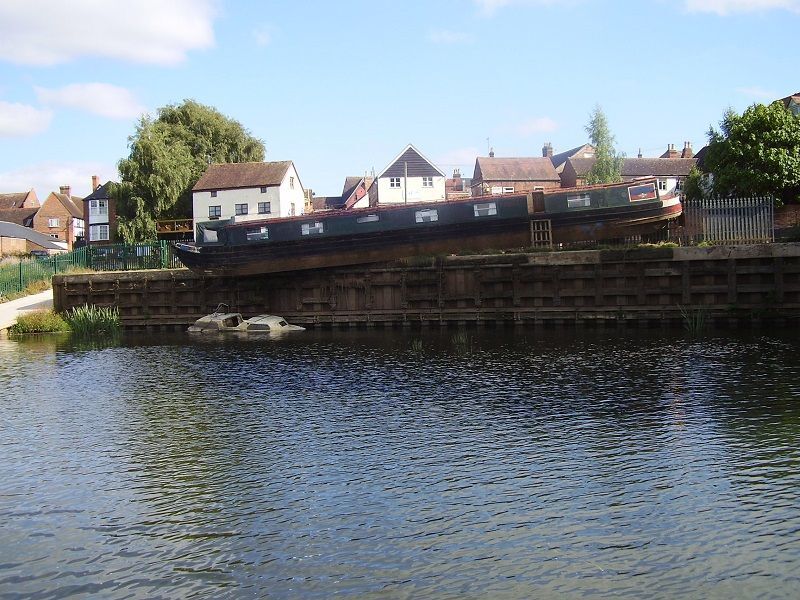
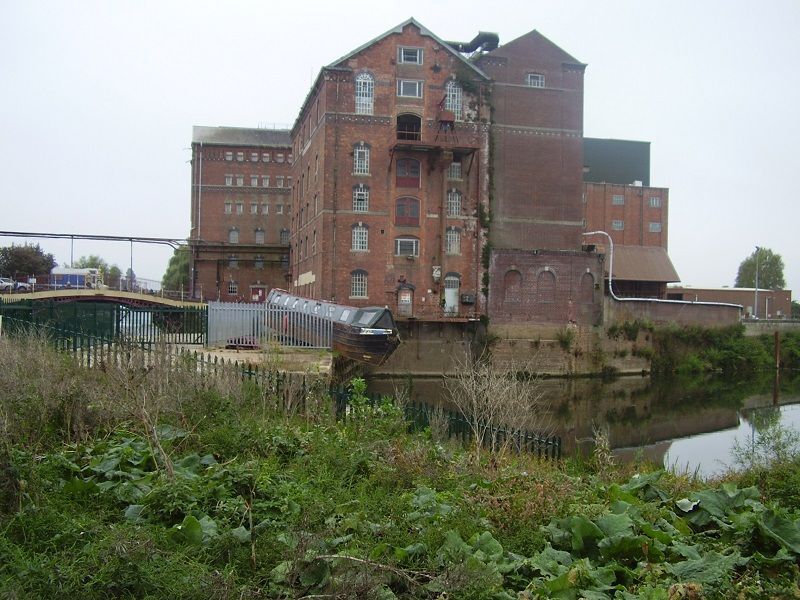
There was a boat stranded up on the quayside when we were there in 2013
-
I've moored there a few times over the years and never realised there was a fee involved.
-
Thanks for your feedback tothecut. Sadly we cannot sort the reeds because dredging them is the only way. One thing I've noticed on our boating travels is how overgrown some of the towpath sides have become, in my are at least. A few years ago CRT said they were going to reduce the number of times a year that they would cut the towpath growth right to the waters edge, from four times a year to twice a year, but assured us that there would be lots of places where they'd continue cutting to the edge so that boats can moor (I think is was every KM). Well not only have they not left as many moorings as promised, but much of the towpath side is now so out of hand that they obviously haven't even been doing any cutting at all for a year or more. In many places tree saplings have appeared, some of which have now become small trees. and in time will be much harder to deal with. I appreciate that in some places the growth is quite floral and looks nice, and that CRT are so strapped for cash, but there are limits I think, particularly when it's sometimes so high that it severely restricts sight-lines on bends, something which CRT probably aren't aware of because most of their staff aren't boaters. Also I think there's an issue with their contractors not doing some of the work that CRT paying for because nobody is checking up on them. With CRT carrying out much of their maintenance based on the number of complaints they receive, perhaps if more people submitted complaints about the reduction of moorings and the sight-lines on bends problem they might get something done. Our local IWA are already looking into ways of helping them with this issue by using their volunteers, but it's going to take more than that I think. Rant over, and I'm braced for the backlash of being called a moaning old git 😉, I know I am! Perhaps I'm being picky, and those of you who frequent the K&A probably wonder what I'm moaning about 🙂, but around here I've been used to something better. Not looking for it to be manicured but just a little TLC.
-
Starting in early October me and my fellow IWA volunteers together with CRT's contingent, will be dealing with the overgrown offside vegetation between Armitage tunnel and the Dove Aqueduct in Burton. We (IWA) will be surveying the stretch (in our own boat(s) during the next 2 months while there is full leaf growth, and noting the places we think need addressing, but any feed back from you others (either locals or passing through) would be most welcome, either on this thread or by PM to me. We use What3words as a location preference, or bridge numbers if the problem is nearby. Sadly we are limited to working only from October to end of February because of nesting wildlife, so we sometimes have to concentrate on just the most critical parts such as on narrow sections, bends (including restricted sight-lines), bridge holes, approaches to bridges, opposite popular moorings, winding holes, low overhanging branches etc. Due to the time constraints, if the veg is something like hawthorn or brambles which are hugely time consuming to deal with (e.g and hour to do a 3 metre section of it), we might leave it, providing it's not on a bend and there is ample room for boats to pass each way either side of it, in which case it's just a matter of one boat holding back to let the other through. Unfortunately with weeping willows we can only give them a 'haircut' which is pretty ineffective, because all of the overhang is leaf growth which re-grows so quickly. They need the actual branches cutting but they are usually too high to reach even with our 15ft extendable pole chainsaws. So it has to be a case of us and boaters snipping a bit off each time as they pass. I'd like to do past Armitage up to Great Haywood. We work for CRT Fradley and used to do it, but sadly after CRT last year changed their boundaries, that section is now controlled by their Stoke depot, and presumably their budget too. So as I said, any feedback from you others would be welcome, and if anyone reading this lives locally we'd love some more volunteers, so please let me know if you're interested in finding out more. Between our IWA and the CRT volunteers we have enough to do 4 days each week but we'd love to increase this to 5 days.
-
I moor in a marina from time to time where the signal strength has always been fairly poor (all networks), but manageable. During the last 3 years the number of liveaboards has increased from 50 to over 100 and the speeds have become progressively worse, I’m assuming because more are using the limited bandwidth. So much so that in the last 6+ months lots of residents have changed to Starlink, and since then things have dramatically improved for we’ normal’ internet users presumably because there are now far less moorers using up the bandwidth? So as far as I’m concerned the more who switch to Starlink the better. 🙂