

Jump to content

captain flint

Patron
  • Posts

    386
  • Joined

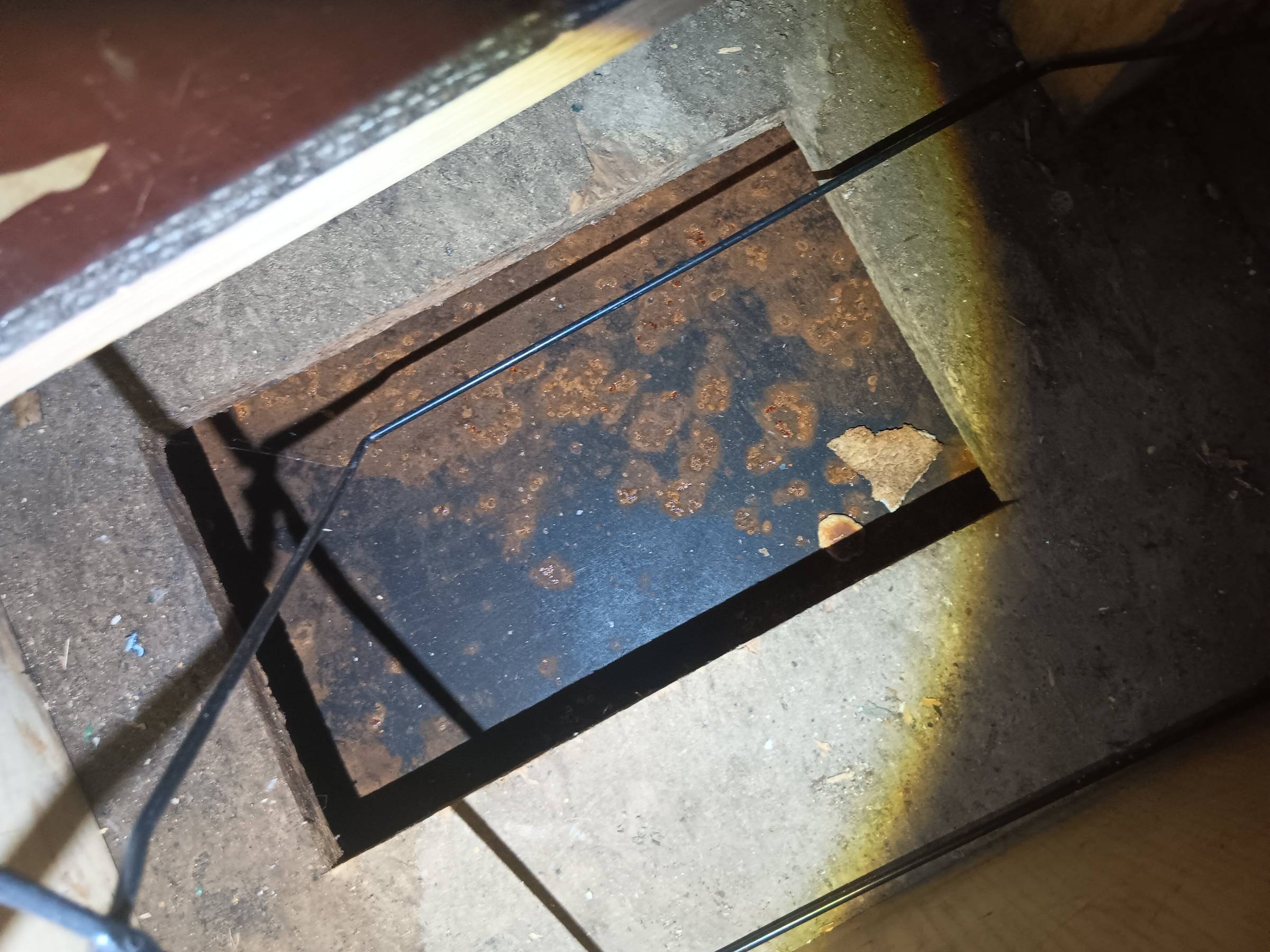
  • Last visited

About captain flint

Profile Information

  • Gender
    Male
  • Location
    London

Recent Profile Visitors

5,137 profile views

captain flint's Achievements

Community Regular

Community Regular (6/12)

48

Reputation

  1. I've found someone who reckons they can shot blast inside my integral water tank! So my plan is to get that done then apply the potable epoxy mentioned in this thread
  2. Yeah, it's a pretty grim job. Luckily I'm slim and short. Conversations I had when I wanted it done last: Boat yard no 1: - Can you do water tanks? - I can. But I won't. Boat yard no 2: - water tanks? - no chance! - anyone on the river you know who will do them? - yes - anyone you'd recommend? - no chance! Friendly (and clued up) boat yard lackey: - I'm looking for someone to do my water tank. Interested? - ha ha ha ha ha ha no - how can I find someone to do it? - what you need is someone slim and short and [gives me a hard look] has a vested interest in getting it done. I got the message. It is hard with these things to think a yard will do a really good job. Then again the yard who I finally found (some time after don't it myself) who could do it seem to be pretty good in general. They're only a few days' cruise away, though it involves going through London, which is a drag. Fair enough, and it doesn't sound like you're having a pop at me at all don't worry. I do waffle, safe in the knowledge nobody is forced to read what I write! As I said in an earlier post, the designer didn't think it would be an issue, but as I also said, I'd be removing all the bitumen, anyway. Just kind of interested in what he said.
  3. If - and it's *the* big if - the coating works as advertised, then that price would seem well worth not having to get in there every 3-5 years! I hope to be able to share them soon. Despite what the designer told me, my plan would be to remove all the bitumen and needle gun the tank. Tbh the main thing for me is it's impossible to grit blast inside the tank. Any reliably adhering epoxy coating without grit blasting sounds great. There are plenty of folk on here who reckon they've managed it, but most reliable folks I know reckon it's grit blast or bust, when it comes to being confident on an epoxy coating adhering. The guy I spoke to did seem to think that even if the bitumen underneath were to lose adhesion in a few places, the epoxy on top would have sufficient structural integrity and give to mean no cracks, leaks, or peeling. But like I say, i would plan to remove the bitumen completely.
  4. I do drink from my tank, but I have a reverse osmosis filter fitted. There are a few available, I got mine from Offgrid Water. Main things to check are if they can cope with low pressure water feed, and if they re-mineralise the water. I'll keep you posted but you'll have to be patient - I'm leaning towards redoing my tank next year, not this. Plus - and I guess this is the real kicker - even if it goes on well and looks good I won't really be able to report much until the coating has been in place for a few years! Blimey. Do you not even use tank blacking?! Don't you worry about corrosion? Having recently helped out a neighbour who had to pull up his floors, and dry and treat his bilge, tank leaks are no joke.
  5. When I spoke to Peter, the head fella, on the phone he told me he'd had two strokes in the last few years. So I guess it might have been health issues that caused him to go quiet, rather than irritation. Anyway he's said he'll be sending me a full guide before any purchase happens. I can't imagine I'd want more than the odd page printed out, which I can do myself That's what I thought but I wasn't sure if I was misremembering /misjargoning. The designer did say that the 2 pack element is one that's on the market, albeit significantly modified. I'm expecting the data sheet before too long. There are solvent free 2 pack epoxy systems out there, though, so I expect it's one of them Jotomastic is solvent free... I did my own last time. The only reputable option I'm aware of anywhere within reach for getting it redone (as opposed to redoing it myself) would charge £1200, which I understand, having done the job myself. It's a pig. But it is supposed to be redone every 3-5 years. £1200 isn't peanuts in itself, but if spending more might been I don't have to open up the bloody thing again for ten or fifteen years that would be amazing! And it might even represent better value for money in the long term
  6. I have a fair idea already as I was in there not so long ago, 3 years I think, scraping off the bitumen and reapplying. It had a few 1-2mm pits under/ near the water intake, some superficial patches on the base and a little rust buildup along the welded seams, but other than that was pretty good. I've recently inspected using an endoscope camera. Not easy to get a perfect idea, but it looks in pretty good nick still, except for under the water intake, where some of it has come away. I've occasionally run the tank dry so I figure the water splashing down onto the bitumen hasn't exactly helped. The paint designer seems to think this product can even be used on, and to repair, corroded and effectively leaking tanks. Here's the page on canal boats, if you're interested: https://www.specialist-coatings.co.uk/narrowboats-barges-wide-beams-canal-boats-houseboats-leisure-cruisers-general-water-craft/
  7. The paint designer specifically said it's not water based and it's solvent free, and that it's is an exothermic* chemical reaction that makes it cure *I think that's what he said. Something thermic anyway
  8. Yes I was thinking about this issue of where condensation might get in. But then, not very scientifically, I was just thinking it might somehow just... Find a way! Liquids and vapours seem good at that. I don't quite follow your comment about it being like a slurry that's set. As far as I understand (not very) it's a two pack epoxy somehoe6 enriched/reinforced with zinc. I didn't ask exactly how. If I had I suspect I might not have understood the answer!
  9. The designer's view was that it would adhere and that, once all three epoxy coatings are properly applied, their structural properties would mean that they, in effect, form a tank themself. One that's flush, and ideally adhered to, the tank proper (plus any coatings), but that even if some of it stops adhering in places, the epoxy should not crack. Under such circumstances I still find it hard to believe that condensation in between the epoxy and the bitumen/steel wouldn't be a potential issue, though. Hence thinking removing bitumen and then needle gunning would be better If it sticks it sticks! Has it stayed on?! If so for how long? And what epoxy were you using?
  10. I would think that, too... But then there's the significant caveat that I was actually talking to the designer himself...! Yes. Peter didn't think that would be an issue, but to be honest I'm going to speak to Peter again. I would have thought the best plan would be to remove all the bitumen and needlegun the tank, rather than apply over the top.
  11. Long post coming up! Summary: there's a company that has a special, proprietory 2 pack epoxy system that is claimed can be applied without grit blasting - in fact, without even needle gunning or removal of any (sound) coatings. I spoke to the guy who designed it, and am relating what he said. * I've just got off the phone with a chap called Peter, whose company's website I stumbled on. He's nearing the end of his career as a chemical engineer. His company supplies specialist 2 pack epoxy coatings. He told me about a 3 coat system he thought suitable for my integral water tank. He sounded pretty convincing to me, very proud of his work and keen to explain it. He seemed much like a proud boffin than a slick salesman. But obviously I don't really know the guy. I would be interested to read reactions. I'm sure some will be dubious. I can relate to that - things that sound too good to be true tend out to be true, after all. I guess he could be a pure charlatan. But if so, he's a very good one, as he does an absolutely remarkable impression of a clued up and enthusiastic chemical engineering nerd. If anyone more technical than me wants to give them a call he seemed more than happy to discuss his product. I asked if they are manufacturers or suppliers. He said a bit of both. They use existing 2 packs on the market, but they modify them. He said what he has really loved about his career is problem solving, and said they've both applied and supplied coatings (for clients to apply) for tanks in canal boats, commercial boats, super yachts, hotels, schools, and prisons, all over the world. He said they've never had to go back to fix any problems with tanks they've coated, even over periods of up to 30 years. He also said they've been used on boat hulls, but my enquiry was about my integral water tank, so we mainly discussed tanks. It's a three coat system, with zinc reinforcing in the primer, which he claimed has an anodising effect which inhibits corrosion, and glass reinforcement in at least one of the top coats, for durability and structural integrity. He said that one problem they solved was with dew points and condensation and damp surfaces. The primer is not water based and also contains no solvents, but somehow(?!) has some of the properties of a water-based system and is able to absorb some dampness off the surface, so can be applied while the boat is in the water. He said another problem was with vibration, bumps and dings. A solution was found during a job in Papua New Guinea in an area prone to earthquakes. The system is claimed to be both strong and flexible, and the tanks they coated there apparently didn't spring leaks even with a fairly severe earthquake (I don't remember how many on the richter scale, I think he said 6 point something). He said that their primer will adhere to anything, even bitumen(!). So long as it's not flaking off. He said in my case he would get rid of any loose coatings, and any rust, and degloss the bitumen with an acetone rag (I have glossy blacking in my tank). Then vacuum very carefully. And that's it! He said if the bitumen is adhering well and not flaking off there's no need to remove it. I asked about guarantees. He's now past retirement age, and they no longer apply their coatings themself. They used to offer a ten year guarantee, and says he's never been called back to a tank once it's been properly coated. Of course, that might simply mean that none of them had sprung an actual leak, rather than that the coating itself was still sound, but even so (if true), pretty reassuring. He thought that properly applied the coating should last 20 years or more, but ten at an absolute minimum. He did say there have been cases where it was not applied thickly enough, but that once rectified it's stayed the course. As they no longer do the application themself they are not able to offer any official guarantee or warranty, though. He said its easy to apply. They even have a colour system, so that each coat is a lighter colour than the last, which makes it easy to tell if each coat is thick enough. He also said it's potable and taint free, and that, unless it's being sprayed, there's no need for a respirator, as it gives off very little in the way of fumes. Obviously I would want one while deglossing, but that's another matter. He says that obviously grit blasting is wonderful when possible (eg hulls), but for the inside of a water tank, all his system needs is for any loose materials to be removed, any gloss surfaces deglossed, and a very careful vacuuming. He said even if there are leaks in the tank they will be filled successfully by the primer. He said ideally any loose coating should be removed, but that even if it hadn't been, the three coats, with their flexibility and reinforcement, should basically act like a complete structure, and should be sound. Though he advised against putting that to the test. Depending on cost, I think I'm going to give it a go, unless anyone can convince me otherwise. If it works as claimed it would save me a lot of time, hassle, and, potentially in the long run cost.
  12. Thanks for pointing this out. I usually use Homefire ecoal, and having checked, it does indeed contain some petcoke 😕 Hi, I could ask you on your email but here we are(!) - does this mean the Homefire snokeless fuel 'ecoal' (which I believe has 20-40% petcoke) would be ok? - and don't worry about "pushing a sale" (in your previous message), you're just sharing info you have. Appreciated. I was told by the webasto engineer that they function better if used for long periods and tend to run into more issues if used sporadically. I'm not saying you're wrong (or that they're right)...
  13. Thanks, Mrs Melly I used to have an Erbespacher of the same (nominal) power and type as my current setup - the kind that heats radiators (and my hot water tank), not the kind that wafts warm air around. For several years I used it as my backup, basically just using it to heat water, and for the odd hour of central heating while I was getting my boat up to temperature having been away. Then I hit a patch wheremy stove was out of action for a while, and over a cold snap, too. At that point I had no choice but to rely on the central heating. And to my surprise it turned out to be brilliant! Easily up to the task, and no more stocking up with solid fuel, faffing about with ash, blah blah blah. I didn't look back! But it was temperamental. And finding someone good to fix it when it needed it got harder and harder. When it needed replacing, going with a Webasto made more sense, as it's much easier to find engineers who deal with them. Sadly, I've discovered it's not quite as powerful as my old boiler (and a bit noisier) but it's still more than capable in all but the coldest weather (the old Erbespacher could even manage that!). I've even changed the control box/thermostat thing to one I can send a text message to, so I can get the boat warm before I arrive, when I'm away for a few days. Which is nice. I do love a stove, and if I need overnight heat I prefer it to having my boiler whirring away, but to my surprise I've discovered that the rest of the time I like it much more as an adjunct to the central heating, rather than the other way round. But, as you say, each to their own! ***** AaaaNYWAY I always love reading people's thoughts on here, and, whisper it, it's even sometimes really helpful. But I'm still wondering if anyone has anything to say about the particular stove I actually asked about!!
  14. The old stove in my 50x10 widebeam (really!) needs replacing. My primary heating is provided by a webasto central heating system, but it needs a little help in the coldest weather, plus it's nice to have a log burning of an evening. A squirrel is an option, of course. Tried and tested. But I'm thinking about getting the stove mentioned in the title. My main question is if anyone has any actual experience of one of these units. Feel free to chip in with your thoughts even if you don't, but I'll take them with a pinch if salt! That's it, really. [...But if you want a bit more detail: I'm thinking of getting the marine hearth, and the oven on top. NB the marine hearth is not the great big black thing sticking out in some of the pictures on the manufacturer's website. It's this - as seen on the website of the fella I'm planning on getting in to install it. I've chatted with him and I like him, plus if you look at the rest of his website he seems very legit. He is himself a boat dweller as well as having an the qualifications. Being a by-the-book type of guy he will insist on a twin walled flue, including inside the cabin, but I'm not getting into all that, I'm OK with it, though I appreciate the downsides]
  15. It's mainly drafts I'm talking about. Weatherstrip sealant is all well and good but it seems there's always just a bit of air flow. There will be an air gap, too. Even if quite small, it might play a part
×
×
  • Create New...

Important Information

We have placed cookies on your device to help make this website better. You can adjust your cookie settings, otherwise we'll assume you're okay to continue.