


wakey_wake
Member
-
Joined
-
Last visited
-
Sounds like shrinkflation. They daren't shrink the bottle, but less alcohol is cheaper for them? I was there already. Half a bottle of beer and some fizzwater still has plenty of flavour. 👍 The day the flavour catches shrinkflation is the day I stop buying that brand. My opinion is not well-researched, so this is only a starting point: It's clear that every browser is different and this will be used by some companies to fingerprint your page views. The Tor browser goes to lengths to make each look the same, and they say "don't change any settings"; but by using Tor I think you would already be in a minority. The EFF and other link I gave above will show approximately how many other people's browsers look like yours, but it is only an estimate and I see some statistical weaknesses, e.g. it does not consider correlation of source IP country to locale settings, so it may under- or over- count some bits of entropy. Browsers requesting English(US) in a US timezone, from a US IP and to a US service? Looks all American. Browsers requesting English(GB) in a London timezone, from a US IP to a US service? Looks like a VPN user, but could be a tourist. Browser requesting Japanese with a UTC−03:30 timezone is probably unique already, so the user can be identified from seeing the same settings anywhere else. You might improve by using NoScript to block the fingerprinters, but doing so makes your browser more unique already; and the likes of Cloudflare and reCAPTCHA are well-placed to demand Javascript and then sell on the other info they glean... whether they actually do? I have no need to attempt to evaluate that. So "obscures your identity"... yes, but whether like a fake moustache and a party hat, or more like a burkha? It depends and you have to check. Corrupt or compromised. Don't forget that some governments spend a lot of our money to unravel those networks... it remains unclear how much of that gets pointed at people not involved in anything illegal, but traffic analysis is very powerful even on encrypted streams. The main Bayrob guy (from my link above, and IIRC) was forced to plead guilty by records of his pseudonym's absence from the attack system - they neatly matching his 30-odd holidays away from his home city where the attacks were based. There is an argument that censorship and limiting what people can see is appropriate when trying to keep unsuitable material from kids, but it is, without doubt, "Big Brother". Addressing the "Big Brother? 🤣" aspect directly is another large topic. The story combines a variety of insults to poor old Winston and Julia. How many of those need to be seen in reality for "big brother" to be a valid accusation rather than a conspiracy theory ? Inescapable surveillance? We have it in some places, but in others it's patchy unless you carry your own surveillance devices. As almost all now do. Unjustified surveillance? It appears to have been well used to find the recent suspected violent idiot: How Police Found the Ann Widdecombe Suspect in Just Days -- Windswept Robert (8m). I'm sorry to say @Ange, if you can't find something to say that is more specific or grounded in current events, then you're the one your actions are looking silly. "limiting what people can see [...] when trying to keep unsuitable material from kids" could be claimed to be more Nanny State than Big Brother. I entirely agree, that letting vulnerable people (of any type) roam unguarded on the Internet is unhealthy. They will come to harm, and that will bring further harm to those who love them. What I disagree with is the proposed solution, of presenting ID.
-
I think the bank is in a sticky place. The correct solution is capital expenditure to remove the need for locking in customers, ie. installing better doors in whatever places are relevant. That may require significant building modification. Telling the public when cash is about to be wheeled out, but before the doors are locked, seems like a recipe for a hostage situation. I'm amazed so many here refuse to see it that way, but not so amazed that some would react that way to troll you. I tend to agree with the principle, but I couldn't get much excited about it myself because of the business calculation: From the bank's perspective, it may be a simple business decision: their security team has a lawyer on it, who knows it's a tort not a criminal issue, and they budget the occasional £25 for hushing complaints. It's less that they pay themselves to sit and think about it for half an hour. It's less than the probability-weighted loss from theft. Over a number of years even, it's cheaper than fixing the problem properly. When I look at it this way I can imagine that if I were on the team approving that solution, I would have to approve it; but after a few like that it would make me want to switch jobs. The big difference on the train is, the doors most likely are justifiably locked for passenger safety. Trying to get off without a platform is what, 5ft drop? Never mind the trains on the other track. Most likely there is also some kind of interlock with the fire alarm, so the doors can open to give you the classic "out of the frying pan, onto the potato masher" dilemma. These three don't sit well together.
-
I can only imagine a slow filter to cause cycling when there is some kind of airlock or springy buffer after it on the pipe. With only main water pipe -> filter -> tap, there is no place for water to slowly flow to, after the tap is off. I expect the mystery will clear up over coming months. 🤷♂️ How annoying is it? / How much effort are you going to put in chasing it? Do you have a liberal sprinkling of stop taps on the pipes around the boat? (They're handy for diagnosing, but be aware some can through-leak without an outwardly visible leak.)
-
My pump had similar behaviour, which seemed to be growing towards failure of the pressure switch contacts. It was probably caused by a denser filter between the pump and accumulator, which you don't have. Source -> mesh pre-filter -> pump -> "Jabsco Aqua Filta" -> accumulator. The increase of backpressure to flow through the filter was causing my pump to cycle a couple of time, as you report. Over months I noticed this was deteriorating into a much more rapid chatter, that caused pumping to be ineffective; and I could visualise the fat sparks burning away the switch contacts during each chattering session. My solution was layered: power the pump through a relay (with decent chunky contact and cheap to replace), reduce the electrical load on the microswitch to milliamps (prevents arcing at the switch), and add a small time delay before switching off. I'm not suggesting that all of this is a suitable fix for you, but I do retain a suspicion that the electrical contacts in the microswitches of pressure switches supplied with pumps are not up to the job of breaking the inductive load. IMO they look like a designed-in failure point. Looking back to your problem, do you have a filter like that somewhere else in the system after the accumulator? Don't forget that pressure and flow are connected at the speed of sound in water, as modulated by the elasticity of pipes and air on the way. My suspicion is you have an accumulator-like airlock somewhere after a granule filter. Because it is downstream, you assumed it was irrelevant to the pump cycling. 🤔
-
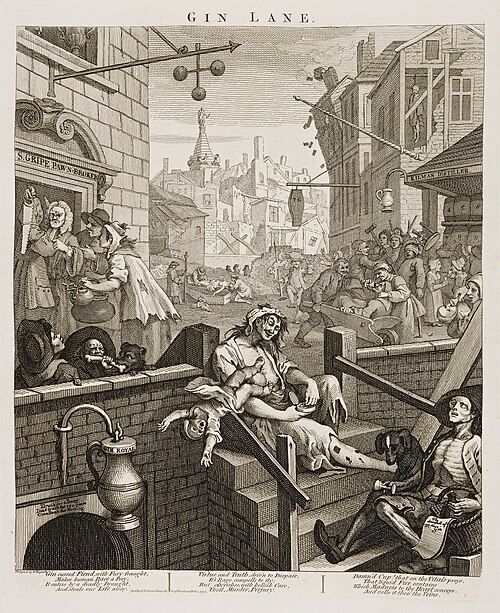
Not completely, because it is technically possible and in line with the known bad behaviour, to initialise your profile with whatever information can be gleaned. See for example https://privacytools.info/fingerprint/ and https://coveryourtracks.eff.org/ . If you're not using a VPN, then you will get a UK-centric view when you land on YT. As soon as you select a video and begin watching, or not watching, then you're giving the machine information. My main point: an incognito browser window is not a privacy panacea and should not be expected to un-bubble you. I've read some research that suggests that the developmental impact of internet access on children may be much less than the effect of their parents with such access focusing on screens rather than frequent interaction with their offspring. 😢 Worst case I heard of was not Internet addiction and harm, but games and death of child. If you're not crying already, look up "Joshua Ruiz-Martinez" or "Danielle Massey" or "Cordarius Cotton" or... I mentioned Hogarth earlier, but this is a fitting place to inline one. Rule 1) if it's good we should share it with as many people as possible, but also Rule 2) if it's making me a little money then scaling up is good for me. To some extent, I suspect the social-media-precipitated tragedies are as much discovery as invention. Like gin.
-
In my experience, autoplay rarely fires on me because I close the tab when a video finishes. Unless I fall asleep, then autoplay gobbles my data allowance and hypnotises me while I sleep. 😱 The scrolling shorts are appalling though - it's like being force-fed. A prompt to eat the next morsel in a custom menu, and the list changes to match which shorts you watch the whole of. It's the crack version of YT but I understand they copied the feature from another SM site? Else they wouldn't be competing. I had to swear off YT Shorts. If I ever watch one, I never scroll. That is practical here because we're narrowed to a collection of topics and have a small group of people. If CWDF got scaled to a million users, we would no longer be able to find anything without a recommendation algorithm. I believe that's how it started! YT used to have a VNC mode and the early contributors speak of watching that to see who they were competing against in content creation. VNC does not scale well, and it gets worse faster when authors are incentivised to use click-bait titles, which came from the competitive / gamified aspect at first, and then hope for ad revenue. "You'll never guess what happened to my boat today!" "He used a composting toilet, and then this happened..." Social media will have a hard job connecting my profile here to anything but it's not impossible. Write a lot of text, risk getting profiled. Hopefully this won't happen until I am clear of certain other hazards... I broadly agree, but my (later) point stands: VNC does not scale. CWDF works because we have one small community. The federated social-media-alikes do look like part of a solution, but they will bring other problems. Currently I think they remain niche, so the other platforms ignore them. Once the kind of development effort goes into federated recommendation algorithms that the other platforms have seen, I expect a variety of bad things to happen. Probably starting with a big social media platform deigning to get itself federated to the smaller ones, and then the competitors have to follow. I'm not sure it's even the paying, because hosting is pretty cheap. You're right that money causes perverse incentives, but even paid advertising can be beneficial if done for beneficient reasons, and gamified Monopoly-money can cause bad behaviour. Current social media platforms will take down a bad channel, if they are convinced it is in their interest (politically or to avoid fallout). That is unlikely to work so well if social media is Balkanised, especially if part of it moves to the dark web. Truth be told 😉 I was waiting for a reply so my comments don't get merged. How does one prevent comment merging? I see other people do it.
-
Sorry for the delay, I have been "up the creek without a [data] paddle". Partly because when I refresh a SIM and have gigabytes again, I will undoubtedly get sucked into watching Youtube instead of actually boating. The Lanier case mentioned by @Wanderer Vagabond is an excellent find! Very telling and I think it's a better angle to come at this from. Perhaps Kaley's case is one of the more extreme examples, but there is plenty of damage being done which may be harder to prove in court. You only have to watch a parent pushing a pram down the street while staring at the phone. 😞 Kids are growing up alone, and they naturally want to copy what the parents do. 😢 Starmer is not disproving that. He did the weakest, most hidden-agenda-driven thing that could be claimed to protect the children, and it will surely fail to do that; and the social media companies will find an angle to take advantage of. I think Lanier has missed an aspect: if all parents would form a union (or something equivalent), then they would have enormous batting power with the social media companies. "Treat our kids right or we will all quit your platform". It still isn't holding them accountable, but it would hit them right between the shareholders. Sadly no surprise, but exactly that has been done in different areas, right under the noses of parents and teachers. WP: Cheese (recreational_drug) is another appalling story. Can we get some laws outlawing addictive anything for children? How would that work? And if we did, will the sugar and sweetener industries (incl. breakfast cereals) be covered? (Speaking as a sugar addict myself) It is clear that many adults cannot fight this addiction, or the more traditional ones. We have been here before, and it got bad enough to leave a mark on our genomes. Alcohol intake has been a "natural selection" event for humans - if you don't believe me that the mark remains on European populations, look at what it does to various indigenous elsewhere. WP: Beer Street and Gin Lane, and what did we get? Eventually, age limits on vending alcohol and some medical warnings. Nipping back to this, I expect the "under 16 ban" will be 85% ineffective. Maybe a 15% gain is useful, but those will be the easier 15%. The inevitable failure will make a marvellous stepping stone to the next law "to reinforce the ban", which will be some restriction on VPNs. That is a guaranteed fail, because although there are some companies to hold responsible there are many other ways to reach the same goal. If China cannot effectively ban VPNs, how will the UK? When I say guaranteed fail, I don't mean it won't stop anybody using VPNs. It will stop some people, or cause their access to be logged and filtered; but it looks rather like a gun ban. When guns are criminalised, only criminals have guns. Thanks, it's a useful comparison. I'm not sure how to analyse it... but clearly our laws have not kept up with progress. In many ways it makes sense for broadcasting and publishing to be regulated a little differently; and there is a shading of grey area from the ISP "purely a conduit" through BBSes "mostly a conduit but with flagging of bad stuff" up to the social media where the algorithm weighs in very significantly with non-content and the social competition context. I'm no law-drafter, but I fail to see how international communication can be effectively regulated in UK law. The terrestrial broadcasters could be regulated as they were ground-based in the UK, until Radio Carolina etc. but which jurisdiction would you say a Tor 'Onion Service' is going to fall under? It looks very Wild West Web. Each service will be physically hosted somewhere, but finding out where is really hard. While I'm saying "ISP is purely a conduit", that is also not true. Some of my 4G connections attempt to redirect some websites, including Tor's, which fails because my browser knows there is a "man in the middle". Anyway my ISP is no longer a pure conduit, but to what end? They cannot possible claim the non-blocked services constitute a safe area for children to roam! If you want deep technical info on how the FBI cracked a crime ring who used Tor, try One Unencrypted File Broke This 10-Year Investigation Wide Open 🎙 Darknet Diaries Ep. 175: Bayrob -- Jack Rhysider , 1h36m. TLDR: crims caused ebay.com transactions to be routed to money mules, who were also victims. I suggest this should reinforce my point that the social media platforms are a warzone, and if Western kids are not the intended victims they're certainly in the severe collateral damage area. To be clear, I have been more than disquieted for a long time. I use SM myself very sparingly, and only for the features I want; yet I still get sucked into wasting hours on 'interesting' YT vids. When I see phone zombies pushing prams I feel an urge to go remonstrate with the idiot parent... but I don't. I doubt it would make even as much difference to them as if I wore a sandwich board of "Repent ye! The end is nigh!" My main point, which perhaps sparked our move to the vPub, is that while Starmer says he is addressing the problem he actually is instead exercising the cross-party government need for power and control. There are different ways to use YT. If you sign in then your profile will build, your settings (e.g. autoplay off) will probably stick for longer, and you have the option to vote / comment / upload your own videos. By not signing in, you can only watch videos and read comments but it will still build a profile on you. By not signing in and also taking steps to refresh your anonymity, you might escape having a specific profile built on you... but at every click within a session, you are being test-fitted into the average pigeonhole of what other people like you also liked. The YouTube comment is true UNLESS you have had your predilections harvested, fed and reinforced over the years. If you have then you are unlikely to either see or believe any alternative view points, even if they are true. An older term is Filter bubble . It is quite hard to escape the bubble, and Tony is absolutely right that the recent implementations of bubble will tend to steer each user into a rabbithole of their choosing - whether flat earthers, left wing, right wing or whatever. The exception, I suspect, is when the algorithm will feed an opposing view as a form of rage bait. 🤣 As I said, it's a war zone. As "One man's freedom fighter is another man's terrorist", also "One man's mainstream media is another man's subversive radical propaganda outlet" ? I agree. So what would a business model look like, to provide the useful aspects of social media (meaningful content and communication) without the competitive addictive drive? The big mistake here is perhaps best addressed with a quote from the Lanier/Guardian article above, The recommendation algorithm is a strange discovery. It is highly effective for bringing us things we didn't know we needed, but it can go way too far in doing so. (I'm stopping for a while. You can reply to bits by selecting them and clicking the floating 'Quote selection' button...)
-
Sorry about the delay. I wrote a lot, decided to trim it, then put most back in. I agree with many of the points you've made, but I think the underlying slow drifts are unclear to many. I think the "historical reasons" explain (but don't justify) the set of problems we currently have; meanwhile parties in all corners are looking for angles to push their own agendas. [To the extent that one can ascribe unanimous intention to any government] these governments have some aligned objectives. Some are known to work together when it suits them. You know of WP: Five Eyes , which no longer includes any of the EU. You also know most electorates wiggle around like a loose bolt on a Strimmer engine, and you know that a ratchet works better if it has multiple pawls or other points of restraint. Brazil, Russia, etc. have restrictions on Internet communication too. I expect we'll agree that those are mostly tighter, more capricious in places, bring harsher penalties, etc.? There is some direct prevention of communication, but the stronger element seems to be "we are watching you; you know we are watching you; and you've seen some neighbours get fined, inconvenienced, imprisoned or disappeared". In the extreme case, mobile phones from NK have been smuggled out + YT/Mrwhosetheboss "Hands on with 2 smartphones that have been smuggled from North Korea" . That's where this tech can go when the supreme leader can fund custom mobile phone design. It's worth noting that Western governments (U.S. and Germany are credited) with direct support of The Onion Router project, which is the most unpredictable VPN out there - also probably impossible to regulate. I believe it is a mistake to consider an entire government to be a unanimous thinking individual. On my 4G 'net, that link to the Tor project is age-gated; it gets diverted to allot.com but Firefox flat refuses to follow that because of HSTS. Maybe it's worth discussing who decided to do that, and what the consequences are? Broadly, my concern comes from seeing how those other countries live, and not wanting to end up that way. That's why I'm bothering to write all this, instead of my usual "silent 🫣 or 🙄". "we already do as much as we can": patently false. Software can always have new features added, even when it has a hot spare kitchen sink and gold-plated bidet already. Ah but when somebody tries to force new features onto the software owners, of course there is resistance! The for-profit software has its business model and needs/wants to make money. Interference in the that will always be unwelcome, and be met with whatever rhetoric suits the day. The libre and gratuit software products usually have no business model and so are very limited in resources. Often they'll pretend these laws will not affect them, or notify the user that they now have those responsibilities, or pro-actively shut down to avoid costly legal problems. "it is an attack on free speech": true IMO, and a real ongoing issue. Unfortunately the attacks have been going on for decades in various forms, so it sounds a lot like crying wolf. I'm pretty sure the wolves are camping outside, hiding in a variety of livestock's clothing; ie. most UK political parties want some new restrictions on speech, so they will only criticise it when they're in opposition - for pointscoring, not for genuine opposition. I think this history is relevant - Before the Internet, effective cryptography was really hard and it is perilously easy to make a false sense of security. For civilians this state of affairs continued until at least the 1970s, if not 1990s. By "crypto" I don't Bitcoin or any of that mess. We can raise a glass to that in a different vpub if you like, but I may only stop for a half. I'm talking about sending a message signed and sealed: Alice writes to Bob, being sure that only Bob can read it. Bob is sure that what he sees is actually written by Alice. Back in the early days of the Internet, most traffic was plaintext. The snoopers are now well proven to exist, so please don't anyone come the 'conspiracy theory' on this one; they could snoop with ease and impunity, limited only by capacity to comprehend the raw data. They could also easily divert, prevent or modify traffic, but my impression is that this was more carefully targeted. Once civilian cryptography started to catch up with the secret military stuff, we had the WP: Clipper chip , "export-grade" cryptography and DES, RIPA (2000) , and hoarding of zero-day software exploits. All were attempts to prevent, slow down, weaken, backdoor or circumvent cryptography. Most governments have an urge to continue to snoop on people, but the cheaply available cryptography makes that more difficult. The most effective known tool these days seems to be malware. That urge: some is legal and approved by honest judges for chasing real criminals; some military; and a whole lot of dragnet trawling is now historic fact. By examples: When a real spy sends a message, of course we want the intelligence services to be able to read it; that has always been difficult. That arms race has been running for centuries. When criminals kidnap somebody, of course we want the police to be able to read the messages the criminals send to each other; and these days it is quite difficult. When you talk to your bank or your wife, you want to be sure nobody is listening in; and these days that is possible but it remains tricky. When I talk to Tony here, I want to see what he truly wrote; and I want him to see what I truly wrote. Showing 'tweaked' versions to selected audiences is possible, and much easier with a modern AI (but it would fail in comically stupid ways). So far I think all the above should be approximately factual and not to controversial? My point is that most governments, and especially ours, have for centuries exercised part of their control by interfering with communications. The methods and degree of effectiveness have changed but the need/desire persists. [...] No, I am not going to trawl back through hours of broadcasting to find it for you, because you obviously did not hear/see it, or more likely, simply don't comprehend what they are trying to do. I asked because I didn't want to attempt to disassemble a view that you don't hold. I don't need a specific politician's interview or anything, just enough to correctly understand what you believe - then I can compare against what I believe. I believe I do comprehend what they are trying to do, and better than most. All conversations I've heard so far on the "social media / children" issue seem to miss the most obvious points - so I'm left wondering who is leading who astray, or working in cahoots for what end? It's true I don't follow the news very closely. Often this could leave me insufficiently informed to have a proper debate on a subject, but I think on this one I have enough. I would try a Ground News subscription for a while, if I thought following news closely might make any difference to anything. 😞 Otherwise what have I got... BBC, tabloids, broadsheets, the mixed sewer/cafe of YouTube, and the even more mixed Twitter/X. I would have to DIY-groundnews them to reach an approximately truthful view of what is happening. That time and stress will produce what change exactly? So the news that reaches me tends to be patchy. The properly factual stuff - a disaster has happened, a Bill has been passed, a ceasefire has broken again just how everybody expected - plus a mixed bag of dubious opinions on why. Upon this, I form my own opinions. We all should bear in mind that CWDF is a social media platform - if not already by law, then it could very easily be with some small tweaks. We have multiple users, each can post some messages, then the other users can see and reply. Among the big-name social media platforms, I'm entirely read-only now. I gave up. Why? When there is meaningful signal, it appears impossible to meaningfully join in an honest conversation. I can write but my message will be seen by only a handful of people. Obviously by failing to engage in that conversation, I'm reducing the number of reads of the messages written by others. The rest of it is a gushing sewer of noise, from the banal through bigotry up to the polite edge of nasty. Attempting to point out what's wrong with it is utterly futile. It doesn't make much difference whether it is created by an army or zealots, or paid trolls, or AIs. I guess some work together in service of whatever they do. While I was still trying to converse I did not get blocked, refused or deleted. X started demanding an age check to see some posts by others - well I don't need to play that game. I know how to use a VPN, I know how to get my age verified. I did neither, but stopped using X. On YouTube, if something is age-gated then I'm not even going to see it. Unless I find a link to a video, then try it and get blocked, I can't know what I missed. Partly because X has threads, and partly I think because of their ideology, the age-gated posts are "noisily censored" so I know it happened. Correct-ish, I have not been explicitly blocked but the 'age check' has stopped me reading stuff. Incorrect, for several reasons. The chilling effects of the current systems are very effective already. 1) If I cannot read a message, I am unable to reply to it. When I write a message, if very few real people actually see it then I am unable to communicate. The latter effect is much more prominent in a big pool of people: on here we choose topics from a fairly short list of what is current. On X and YT we will be unaware of a thread's existence unless the platform puts it under our nose, or we go looking for it in some effective way. that they prevent me conversing on the big-name platforms. Some is the machinery of the brainwashing arms race [below], some is by the tools of Western censorship [the topic], some is just spammers climbing over each other to get a milli-penny for some auto-generated rubbish. 2) Restriction of my 'reach' (wot they clamour for more of on X) or a 'shadow-ban' on my writing will mean that I can write, but no people will read. Except a police bot trawling for unacceptable du jour, which has the capacity to read the majority of what is published. This adds up to a disproportionate risk of unjust punishment vs. an insignificant chance of what I write making any difference to anything. The sane thing to do is give up, ie. be a passive elector/worker/consumer; a sheeple. 3) Just because nobody has prevented my online speech, doesn't mean censorship is not affecting me. Let's use pensions as an example: I have my opinions and needs for the triple lock and how it will affect the economy. Nobody gives a fig what I think because I have only one vote, and I get to use it only a couple dozen more times before I pass on. However multiple people speaking up on the issue might make a difference - these are group issues, and it will take group conversation and leadership to nudge the issue one way or the other. The group of youngsters could reasonably want the triple lock removed, or suspended for a few decades, or have the retirement age drastically reduced. They have to pay in for years before they get any. The group of oldsters could reasonably want the triple lock to stay, or be strengthened. Many would be happy if retirement age were increased further, to fund the payments, because they already met that. They get the payments and can share (immediately or later after IHT) with any youngsters they are particularly fond of. If those conversations are prevented, diverted into stupidity, or happen in a tiny corner where only a dozen people join in... then those are effective forms of censoring that conversation. The 'approved' form of the conversation can be pushed elsewhere. Maybe you would use a different word? We could use some more descriptive terms because it's a complicated topic. That has been going for quite a few years. Facebook and old Twitter would suppress stuff that didn't suit them for whatever reason. Musk claims, in part at least, that this is what motivated him to buy Twitter. It continues and you can still see today, if you read replies to any X.com/elonmusk post, the reams of people begging him to unblock their account which was banned before he bought Twitter. They seem to think he reads all the replies to his own posts?! 🤣 What I think has changed is the containment bubble. X now claims to be 'free speech absolutist' (I do not believe this, but what is allowed has changed). Also Telegram and others have attempted to take themselves entirely out of the encrypted channel, so they may be unable to censor on a fine-grained level. I presume the new age/ID check laws are prompted by one or both of these, or a ticking hidden political clock. @Tony Brooks I'm inferring that you think 'company censorship' cannot be blamed on the government, therefore it is not 'government censorship' in the West? I disagree. They don't align perfectly, but each attempts to force the other to its bidding. The 'age check' block is not direct censorship by our government. I suspect they wouldn't quite dare, yet; they want to keep up Starmers facade of “We’ve had free speech for a very, very long time in the United Kingdom and it will last for a very, very long time.” It's done by a company which has been put in a position (socially as it perceives, and legally per jurisdiction as inferred by geo-IP lookup). The company takes a guess at what might cause them a problem they care about, and puts it behind an age block. If they don't do that enough, they're going to get legal threats. Naturally they may ignore problems they think will not cause them trouble. Is it not obvious, this will tend towards over-censorship unless they have the strength to push back on every issue or post? That older 'age check on sensitive posts' had two effects. a) posts which hit the nebulously defined 'sensitive' are withheld (conspicuously or otherwise) from the majority of users. b) users who go ahead with an ID check have been quietly warned: "Whatever your account name, it is now tied to your real world body. So remember what happened to Lucy Connolly and be careful not to be 'insensitive'." To me, and I think many others, the intent is clear: to not be caught stirring the unacceptable kinds of trouble. One solution to not being caught is to use a strong pseudonym - well that is being closed off with 'age check' by ID. Another solution is to be (physically and permanently) in another country. A third is to shut up and not make a fuss, even when bad things are happening. The newer 'age check on social media' seems to skip a) and go straight for b). Was there not enough uptake with the ID checks? Was it always the plan to tighten the ratchet this way? (is it a response to this summer's riots which haven't started yet?) Are the companies pushing back too hard on the topics the government(s) want age-gated? Something else? I do not impetuously spout ill-considered reactions on Facebook. Valid opinions (not mine) state the sentence on Lucy Connolly was unusually harsh, and from that I infer that somebody in power is very keen to discourage everybody in the UK from doing anything similar. I do not attempt to rabble-rouse or brainwash. I believe it's well accepted that several governments are engaging an arms race to break populations of people into various faction? I'm reluctant to bother going down that rabbit hole but the evidence is clear enough to me, and you make reference to it [your text below]. We know 'AI' can be used to talk to humans, and we know it can persuade some of them to do stupid things, and we know that it's increasingly hard to block out AIs even when all the humans involved agree they want to. Point is, while bulk automated conversations are being used to engage every citizen who ventures onto 'social media', it will be impossible for me to have a meaningful conversation there. If I had the single-minded conviction of an Icke or a Farage then perhaps I would engage the arms race myself and try to drum up a million followers? I may be mad, but not that way. I have close to zero energy for writing 'opinion pieces' or holding interviews. I admire the likes of Andrew Gold, Konstantin Kisin and BlackBeltBarrister for working hard on it, for getting heard, and generally holding a rational and balanced view on many things. I don't think I can do what they do. Yes, it was a caricature. If I had a better metaphor to hand I would have used that instead. It's clear enough that many influences, online and IRL, are easily influenced by malign or stupid influences; and social media is one of the vectors. I agree that something needs to be done, but I disagree that ID checks for UK citizens partaking is a sensible or effective response. Instead I believe it's motivated by other desires [circumvent encryption] and will slow prove ineffective at the stated aim of protecting children. Note that Firefox recently acquired a VPN button right on the default toolbar in the standard build. Going to an obscure age-gated website isn't going to be necessary, to circumvent age-gates! Also note that one of the major collective crimes of our recent years, against girls and young women across several counties, is still being suppressed. There are many who refuse to be silenced, but the powers that should investigate and hold people accountable clearly have orders not to. In the light of this, one must question why 'child abuse stemming from social media' is to be cracked down upon, while 'child abuse stemming from real life bullying, violence and drug pushing' is to be tolerated. My answer is that the relevant aspect is not the children - they are only an excuse - but the social media. For the reason I showed in the historical bit. Hence the (ironic or stupid, depending on usage) phrases "think of the children" or "if it saves only one child". 🙄 Am I still parroting the companies line? I've shown you the relevant history; and the evidence that the claim that this age/ID gating is for the protection of children is flawed. Now we're getting closer to the bad stuff that needs preventing... Obviously when the preying on children continues, legislators can return again and again. VPNs will be on the radar soon ("gateway to vice" or some such, I imagine). Perhaps cryptography itself after that - because if cryptography is not banned, then VPNs cannot be completely and effectively banned. I don't think it's "everyone else's problem to solve", though I didn't make much of this aspect in my previous post. I think it's lazy and foolish for parents to give children Internet-capable devices without over-the-shoulder supervision, or a known safe area, or at least some record of what they see and share. Comparing to city neighbourhoods, the Internet is a mixture of nice areas and bad streets where you can get robbed or kidnapped; but the telltale signs are less obvious. If you don't think a person has the physical and mental strength to visit a favela or slum, then don't let them unattended on the Internet. So where are the tools to help parents, teachers and carers for the other vulnerable in society? I would say that technical standards writers and the rest of the software engineering profession have let us all down, and ought to meet this old challenge in a new and effective way. I've never used Net Nanny, but I rather doubt it is the answer I'm picturing. Tony, please talk to me to find out what I grasp and what I don't. Why is it like this? There have been letters and gossip for millenia. I don't know the history libel/slander/obscenity laws but each society has made its own rules over time, and for every rule there are always failures of false conviction and false acquittal. Since the printing press, it became easier to mass produce a pamphlet denigrating some person or business. I tend to assume that this is the origin of libel laws, as distinct from slander laws. If it's important I could learn more, but for now I'm moving on with mild ignorance. Communications moved on, I think in this order: the postage stamp (semi-private one-to-one conversations) the electric telegraph (short text messages sent long distances, mediated by strangers with technical proficiency in Morse), the telephone (apparently private one-to-one audio conversations). It seems to me that these reduce the impact of distance on a personal conversation, but they didn't change its nature. Then radio and television broadcast. Suddenly one person could speak to thousands or millions at a time; including propaganda transmission to another population during times of war. Obviously this brought a need for standards of what should or should not be said on air; and people naturally pushed the boundaries. However you can't hold the conduit responsible for what is said - it is ridiculous to blame the printing press itself, the postal system, the radio transmitter, the telephone line, the fibre optic cable or a router. They are not the origin of a slander or any other crime, but they have been abused (perhaps criminally) during the act. I believe the telecomms companies, router hardware manufacturers etc. should remain in the platform/conduit category. Do you agree? Increasingly they are unable to know what communication is being passed across them. Your comparison to publishers is useful - I think this is now ripe for change. One can hold a book publisher accountable because a human at the publisher should have become somewhat familiar with the text before agreeing to typeset and print it. Remember, typesetting used to be intricate manual work! These days one can self-publish a book and have copies printed, and I doubt another human ever needs to see one page of it - except the law continues, so presumably publishers are bound to run some automated process to detect legal problems? Or does self-publishing mean that the author accepts also the publishing role, and merely delegates to an automated printing press? The social media platforms really were a conduit, because no human or team of humans could be expected to scan the volume of messages passing through the system. That's why they have "flag this message", so users can [ineffectively] invite enforcement of policies. How fortunate we are to have CWDF policy enforced by real friendly humans with an interest in the subject, rather than a team of bored piece-rate workers who are being driven insane by their horrible job. For there to be legal process against a poster (rather than the platform) is tricky. There should be effective legal process, but cross-jurisdiction issues can allow posters to evade responsibility, platforms can be under- or over-eager to leak the author's real identity, and some litigators engage in SLAPP. However it's not clear that holding the platform responsible in loco the real author is actually useful or sensible? What is changed? Social media platforms became more than just a chat forum. They acquired a scale that makes direct meaningful responsibility or human navigation impossible, and they added advertising to monetise the viewer. This brings in recommendation algorithms, or "the algorithm". These things seem to be new in law - they direct the attention of people (adult or minor, status quo), they are entirely amoral ("people who bought baseball bats were also more likely to buy: fireworks, balaclavas"), and they are subject to gaming by promoters of the content they recommend ("please like and subscribe" being the most banal form, "Bob was shocked! Find out what he did when this happened!" is the fashionable stupidity). I believe the law has not caught up with recommendation algorithms. Trump's wrestling over TikTok is the first I'm aware of, but I don't follow these things closely. The next is AI overview. Where status quo only allows social media readers to click a "flag this post" button on an existing post, the new technical capability would be to have any of the current AIs read a message over before it is posted and make an array of judgements. Is it promoting harm to readers or others? Does it seem to promote illegal activity, scams or bogus medical treatments? There are many possible actions beyond blocking or shadow-banning the post: bot confronts the poster and discusses it before accepting, bot writes a banner to go above or below the post, bot invites other humans to weigh in on the post... Youtube already does a very weak form of this. Some videos will get a little banner "Climate change / United Nations • Climate change refers to long-term shifts in temperatures and weather patterns. Human activities have been the main driver of climate change, primarily due to the burning of fossil fuels like coal, oil and gas." Of course it will annoy people, to have a clanker criticise their writing when they hit send; but it can be managed, and it can be dialled up/down per issue. In summary: yes the platforms have an unusual legal position, that one must take the post author to court and not the platform. In the past I think that was justified - technically and for historical reasons. Now the 'platforms' increasingly clearly are not pure conduits, and could develop capabilities to so we need our legislators to address that. Fiddling with ID checks is not that, and it's a rare company that will proactively accept new responsibility. I believe the legal powers exist, against authors not the platform. They seem to be weak to the point of being ineffective; except sometimes. If statistics are available, I haven't seen them. As I said above, I think the platform's content promotion algorithm is overdue some legal review. The platforms will fight that hard, obviously. There is also the sociopathic money-grubber aspect in some cases. The accusation I've heard seems well-evidenced: "Meta Made $16 Billion Helping Scammers Rob You", along with them disbanding the anti-fraud team. It wouldn't surprise me if there are similar cases not yet come to light. I agree that shared liability would make a huge difference. I'm not sure "publisher" is the right framework but that, and some technical implementation ideas, are something to discuss. I'm not optimistic that companies so large can be effectively brought to heel, but there are precedents e.g. Bell Systems was broken up. (Was that effective? My impression is not). Still, this is pretty far from age/ID checks. Also cleaning up all social media won't make the rest of the Internet clean and safe, so something like parental supervision of kids is still needed. Yes, what to do when the company is foreign so a local legal process can't touch it? The options seem to be negotiation, political dealing with the native country, and then a nation-wide blocking. However the blocking hurts the users, possibly more than the company. Users are replaceable. Perhaps also making a home-grown replacement and pushing that so hard that users all switch - can we say "WeChat"? I suggest it is not 'pussyfooting', but angling to make and use power; ignoring the damage caused by use of that power by others. While the social media platforms are facilitating abuse of minors, that abuse can be used to promote (predictably ineffective) laws which are wanted for some other purpose. While the social media platforms have this great power to influence populations, it's a tool that can be co-opted. Breaking that tool up risks losing the power and distributing it in some way that can't be co-opted. Those social media platforms are a battleground (and kids are among the victims of collateral damage?). The list at Troll farm doesn't list our 77th Brigade (UK). Maybe there is some distinction in purpose or practice.
-
I understand the existing blanket doesn't cover the metal, and I don't know what temperature a big silencer reaches. (Mine is much smaller, fully wrapped in glass fibre tape, and temperature not measured) However I suspect a welding blanket could disappoint in a hot way. I think they are designed to physically contain (e.g. splashes of hot metal) and block radiation. I doubt they will be very effective to insulate against heat conduction. Sorry that's probably a bit late. Did you get it? Am I wrong? 🙂 What would I get instead? Dunno. Possibly rockwool wrapped in cotton or wool? The aerogel above would insulate marvellously, but I suspect it would crush easily and become dust. I've never handled any.
-
Thank you @1st ade & mods. I piped up because I greatly respect @Tony Brooks and his thinking processes, but what he writes suggests that his views of the under 16's social media ban are very different to mine. Therefore one of us had a relevant thought which the other one didn't. Is it possible to diagnose that one? (I'm not interested in political slanging matches, left vs right, or even figuring out what left and right are these days.) ETA: showing new posts didn't show me all the new posts... 💤
-
So it doesn't squirt during normal use (which was not obvious from the static photo) but putting the end of the hose too close to any object is going to dampen your trousers from afar. Again I'm surprised, because I've never seen one IRL. I was distracted by both the DCV (6.3 version) and the presence of the boat apparently taking on domestic water, which muddied the issue of Cat3 vs Cat5 and DCV being unsuitable for Cat5. I'm fairly sure I've never seen the gravity tower version on a local scale. I think at least 5m head would be needed, if not 10m, and that won't be subtle. I've seen the pumped unit on an estate - the builders fitted it and it's possible nobody knows why. It broke (frost damage and community neglect?) and has been bypassed with a plain bib tap to Hozelock. What continues to surprise me is not seeing these out in the wild. I like to think I would notice unusual plumbing unless it's all concealed. Possibly because I've not cruised widely? Possibly because all installations I've previously seen were pre-1999 spec, and therefore we're lucky if there is even a DCV? Possibly because site plumbers have been ignoring the post-1999 water regs? I put the jet in, but not the hose itself. I hold the pipe some distance from the end... but I was happier before I considered what other people probably do with it. The self-closing trigger is a monstrosity. Great for pre-washing dishes in a restaurant, but in this context how would anyone ever wash the trigger? What it wants is a large frisbee or inverted funnel attached on the end, so it can squirt somewhat up or across but never go inside.
-
Thank you @CIEL for the excellent reply! It sounds like an sorry lesson in why house builders should stay out of marinas, or at least get in somebody who knows what to do! Unrelated except in technicalities of the form: when you a big quote, if you put your writing cursor somewhere in the text and press Enter to make a blank line, and then move to that blank line and press Enter again, the quote will be split. That allows you to write conveniently and neatly between the chunks.
-
True (which is unhelpful) but my earlier reply is now marked as the solution. @Signwriting by Coop thanks for the fix mark - my first. In general in almost every case, asking questions goes better if you give the relevant information up front. I'm up for discussing the rest of this, and happy to visit the vpub for the purpose. Usually I abstain, but I do have a cold one in my grasp as I write... let me know if there's a thread for this? So far as I'm aware, the question was of the form "do you want all the children to DIE?!" and when the majority (obviously) says "no thanks, that doesn't sound too great" the answer was "excellent! now we shall confiscate all your sharp objects". We got no honest discussion about sensible ways to solve the problem. What's wrong with making parents (and in school, teachers) responsible for ensuring kids don't go on social media? And extend that to non-social-media sites which are harmful, because I'm sure there are plenty. This is what we do with alcohol. Providing alcohol to children is forbidden (ish). We blame the shop or publican for selling to underage, not the brewer. It's not a perfect analogy, but who put the computer or mobile phone in the kids' hands?! That is the place to start; unless you're terrified of free speech posts by adults on social media, and think that aggressive enforcement with heavy penalties might not be enough. or might cause people to use pseudonyms (who me?). Go on, show me the misinformation.
-
Excellent to hear - the only thing more excellent would be to hear that it works and results in thieves getting banged away, or banged up, or both. My point is to put it in a place a routine hull survey is likely to find. This might be much slower to take effect but seems reasonably certain. Belt and braces. I could print out multiple copies of details and hide them around the woodwork.
-
Measure the power consumption and put it in your power budget calculation. Do the same for the volume/surface area budget. Job done! 👍 My old mains hifi runs a transformer continuously, with 5~10W (I forgot) even when it's "off", just waiting for the zapper to wake it. I'll keep it until I have no more cassettes. My boat hifi is a nice pair of speakers plus booster amp for car, so it eats 12V. It has a Bluetooth thingie strapped to it, but that pollutes the audio with digital noise.