

-
Posts
33 -
Joined
-
Last visited
Profile Information
-
Gender
Male
Recent Profile Visitors
The recent visitors block is disabled and is not being shown to other users.
Guy J's Achievements
Explorer (2/12)
6
Reputation
-
Guy J started following Paloma Bob
-
White vapour only at high revs under load
Guy J replied to Guy J's topic in Boat Building & Maintenance
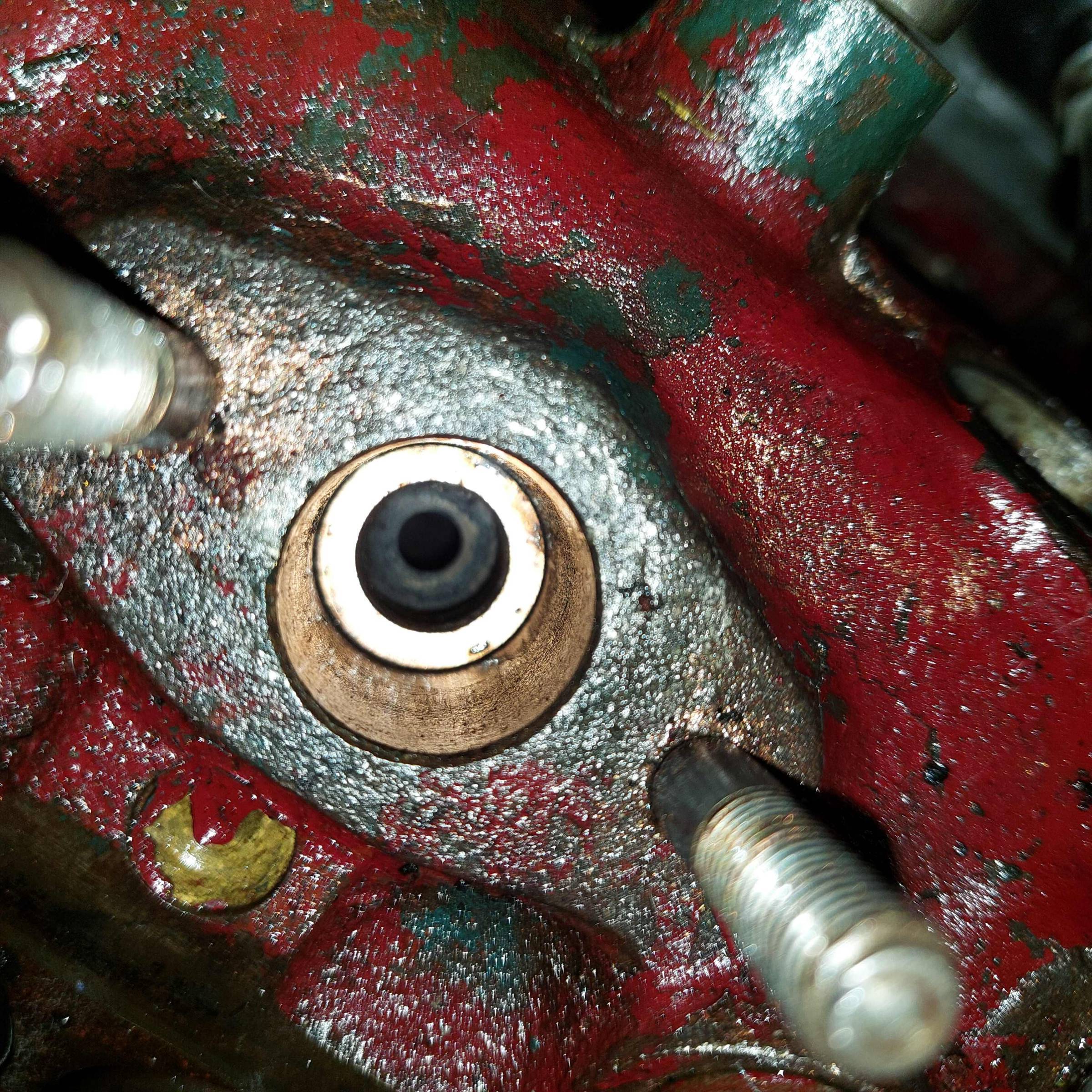
This seemingly puzzling problem now seems to be fixed. All the head studs have been replaced. Also, a new head gasket has been fitted of a different make from the other two which had been previously installed in two attempts to solve the problem. The dense white odourless clouds of coalesced water molecules previously emitted at the exhaust under load above 1500 rpm, are no longer present at all revs with or without load. This suggests that the cause was cooling water entering cylinders via an imperfect seal between the block and the head. Theories presented in the posts as to why this might have happened are fatigued or stretched head studs from repeated head removal and replacement and/or that both previously installed head gaskets were faulty. The 93 posts with helpful suggestions have been extremely useful in giving us encouragement to persist with our attempts at solving this problem and in eliminating various possible causes. Guy, with immense gratitude to Warwick, the principal brain behind this operation, and his time and patience with me and my BMC. -
White vapour only at high revs under load
Guy J replied to Guy J's topic in Boat Building & Maintenance
Corrected the units above. -
White vapour only at high revs under load
Guy J replied to Guy J's topic in Boat Building & Maintenance
There are two points about which I was misleading - firstly I meant ftlbs, not psi, when referring to torqueing up the cylinder head, and the torque setting I applied was 71 ftlbs Secondly, I was referring to water molecules coalescing outside the exhaust pipe, when pressure and temperature are reduced. Apologies for my errors. -
White vapour only at high revs under load
Guy J replied to Guy J's topic in Boat Building & Maintenance
No, but it arrived in slightly imperfect condition and was made in India, so I wasn't entirely happy with it. -
White vapour only at high revs under load
Guy J replied to Guy J's topic in Boat Building & Maintenance
I have used crack detector spray on the block and inside the bores, and I’m confident that there are no hairline cracks here. I am pretty sure that the dense white lingering clouds emitted from the exhaust are the same as if one pumps up pressure in a bottle containing a little water until a valve in the neck is blown out, where the sudden large reduction in pressure causes invisible water vapour in the bottle to partly condense into a dense white cloud. Added to which there is no odour or taste to the liquid condensed and vapour emitted. I am going to fit a new good quality head gasket, in perfect condition, reassemble the rest and torque the head (with torque wrench) as accurately as possible, checking and retorquing more frequently than is recommended. And I am also going to replace the cylinder head studs, as we now think that these could have been fatigued and stretched by repeated torquing up. The stretching could explain why the torque on most of the nuts had decreased quite substantially (to about 40 psi), despite having been checked several times. My friend’s explanation for this is as follows: As pistons 2 and 3 begin to move down together from TDC, the reaction force on the head from the piston on the power stroke may be sufficient to separate it momentarily from the block. A combination of high engine load, high enough revs, faulty head gasket, fatigued head studs and improperly torqued head nuts may allow this to happen. This head separation in the area around these middle two cylinders may allow cooling water to enter the one with its piston on the intake stroke, as it will then be at lower pressure than the cooling system. This will be followed by an increase and then rapid decrease in pressure as this piston then progresses through the compression, power and exhaust stroke when the opening of the exhaust valve will cause the sudden pressure drop and coalescing of the water molecules as they are expelled. Perhaps this could explain why a white odourless cloud condensing as tasteless water droplets is suddenly emitted from the exhaust only when the engine reaches 1500 RPM under load. I realise that the studs are not the modern springy stretchable type, but he advises that all metals possess these properties to a degree. I look forward to any thoughts and will update when I’ve done all this. -
White vapour only at high revs under load
Guy J replied to Guy J's topic in Boat Building & Maintenance
Thanks again. Water is not being chucked into air inlet or onto exhaust when in gear - the engine is well inside the boat away from the weed hatch and any other water sources. I have been testing the engine in reverse only, with the stern pushing against the bank. Regarding the white vapour emitted from the exhaust, it is definitely water of some sort (as explained in previous posts) but, as you say, it doesn't look or behave like steam. I have attached a picture showing this, I don't think you can attach videos.. I have used Parweld dye on the block top surface, with no indication of cracks. The head has already been pressure tested.. so i haven't dye tested this. The boat has a traditional grease-lubricated stern gland, well away from the engine which is inside the cabin. There is no emulsified oil under the rocker cover. I am considering replacing the head, with a new head gasket, and performing a test previously suggested, by restricting the cooling water flow and revving not under load to increase the temperature to determine if the white emissions from the exhaust are caused only by a temprature increase and not by some other effect of putting the engine under load. As I am clutching at straws rather, I thought I would ask if anyone can confirm that the test I did for water vapour or diesel is definitive? I am aware that a small amount of water comes out of the exhaust of all diesel engines, and that it doesn't mix with diesel. To clarify, I caught some vapour in a 10l plastic container, it condensed and I tasted a drop or two. There was no hint of diesel, and the vapour doesn't smell of diesel, either. Before I reassemble the engine, can anyone suggest any other tests I can do while the head is off? -
White vapour only at high revs under load
Guy J replied to Guy J's topic in Boat Building & Maintenance
Thanks very much to everyone for their help and interest. I will try to reply logically, clearly and comprehensively. As we know, increasing the engine speed to above 1500 rpm under load produces large amounts of water vapour. As I mentioned, I have run the engine with almost no water in the header tank, and the white vapour is unchanged (Bowman unit almost impossible to empty completely – see previous post again). It’s been mentioned a few times that water would not be able to ingress the cylinder due to the much higher pressure in the cylinder than the water system. If there had been, for example ,a leak in the seal between the engine and head, why could water not be sucked in on the inlet stroke, when the pressure is much lower and diesel / air are entering the combustion chamber. The issue would then be, why is it only happening after 1500 rpm? Regarding the possibility of a cracked seat under the value – the valves were indeed left in situ, and I will call the company who carried out the tests (Gosnay’s Engineering in Romford) to see if / how they were able to check this. I am currently using fuel from a plastic can, and I emptied and check this yesterday for signs of water, and there are none. I have run the engine several times, but once for about 30 mins at quite high revs (in neutral) in order to reach its normal operating temperature and to boil off any water vapour that may have accumulated in the manifold. Regarding the symptoms, I have run the engine in neutral up to about 3000 rpm with no sign of water vapour. Returned to neutral, went into gear (boat tied up) and slowly increased the revs. On approaching 1500, traces of white vapour appear, then a slight increase in engine speed produces clouds of white smoke; it is not possible to do this for long as people think the boat is on fire! To answer some more points – I’ve been testing with no breather pipe attached from the rocker cover. The configuration is as follows: one tube from the rocker breather, one tube from the engine breather (side of the crankcase) teed together to go into the air intake. These have all been disconnected for testing so there is no extra gubbins around. I have checked the breather pipe from the engine, and it is unobstructed. There are no other engine symptoms at 1500 revs except the white vapour. Regarding the potential problem with a vacuum in the crankcase breather – this pipe has not been connected for a while so a vacuum would not be possible. I will now buy some engine dye to test the block head and, I hope, the cylinders too. Is there any reason I can’t test the cylinders, two at a time, taking care with the dye itself. -
White vapour only at high revs under load
Guy J replied to Guy J's topic in Boat Building & Maintenance
Thanks, again, just to clarify, the engine is in position but the head is off. Will consider your replies now. -
White vapour only at high revs under load
Guy J replied to Guy J's topic in Boat Building & Maintenance
Thank you for your replies. Yesterday we examined the exhaust closely; The end points downwards slightly,as it should, and it has been moored next to another canal boat since the problems started. We tried to see if we could get water up the exhaust pipe by using kettles etc., but it was not possible. I then used my wet vac, which is very powerful , and it didn't suck anything out at all. Sadly I therefore think this idea can be discouted. -
White vapour only at high revs under load
Guy J replied to Guy J's topic in Boat Building & Maintenance
We have attempted a number of tests suggested and have encountered various practical difficulties with uncertainties as outlined below. Pressure testing of the whole cooling water system proved inconclusive as access problems to all pipe connections made it impossible to rule out slight external leaks causing small pressure drops. Next we drained the Bowman exhaust manifold/heat exchanger, removed the cooling water hoses from this and connected them together via a T section to an improvised header tank as suggested. Running the engine under load above 1500 rpm still produced white vapour from the exhaust as before. However, it seemed impossible to know if there was any remaining water in the Bowman tank as its construction prevents visibility of or probing the tank bottom around the lower section of the exhaust pipe passing through the tank. Wondering if any remaining water in the tank could, as has been theorised, be getting sucked into the exhaust via a crack opening up here, this test seemed possibly inconclusive. Next the head was removed and its cooling water pathways pressure tested by a company specialising in this, with air and boiling water to 30 psi. No leakage was detected. They also tested the head for warping and proclaimed it OK. Now with the Bowman manifold system removed, its tank was filled with boiling water and pumped up to 10 psi. This dropped to about 5 psi after a few hours but was still at 5 psi 12 hours later. No water could be detected exiting from the exhaust pipe connection or from the exhaust manifold ports no mater at what angles the system was held at. We suspect that the initial pressure drop was caused by water and air contraction on cooling and imperfect sealing of the pressure cap when near its blow limit. When tested cold with air and increased tension on the spring in the pressure cap there was an initial drop from from 10 to 7psi which it remained at for many hours. If cooling water is not leaking into the exhaust or intake via faults in the head or the Bowman heat exchanger/manifold as indicated by the above testing, can anyone suggest how it could enter via fault/s in the engine block or a faulty seal between block and head to explain continuous clouds of water vapour from the exhaust only under load above 1500 rpm. Also suggestions for any signs of causes of this to look for while the head is off. Reassembling with a new head gasket and trying the suggestion of restricting the water flow to increase the temperature when not under load could be done to prove that this exhaust water vapour emission is caused only by high temperature. This unfortunately was not done before engine disassembly. Any other suggestions for observation or testing before or after re-assembly would be very welcome. -
Guy J started following White vapour only at high revs under load
-
White vapour only at high revs under load
Guy J replied to Guy J's topic in Boat Building & Maintenance
Thanks! The crankcase breather is not connected to the manifold - it is misleading in the photo - it connects to the air intake via the air filter. -
White vapour only at high revs under load
Guy J replied to Guy J's topic in Boat Building & Maintenance
TAs so often happens, the OP did not say exactly how he tested it, and as it seems access to the engine is difficult I concluded he did not take the manifold off the engine and did the test in situ. However, that is a guess so unless he clarifies what he did, neither of us really know. As so often happens, the OP did not say exactly how he tested it, and as it seems access to the engine is difficult I concluded he did not take the manifold off the engine and did the test in situ. However, that is a guess so unless he clarifies what he did, neither of us really know. If the engine is as cramped as you suggest and as it is inside the boat, I would advise that you do not do this. On a cold engine (ambient temperature) there should be no drop of pressure over half an hour or more. I think the only thing you can do now, short of pressure testing the manifold, is to do as suggested earlier and temporary re-pipe the engine, so the manifold is bypassed, but you will need to T into this pipe at its highest point so you can fit a header tank. Then run the engine. If no water is in the manifold, then there should be no vapour if the problem is a leaking manifold. Thanks again for the messages. Sorry.I wasn't clear. I didn't take off the manifold but tested the cooling system with the contraption shown in the photo to keep the cork in the top of the radiator. This also shows the location of the engine and how I will have to be very careful testing with a loose exhaust manifiold. Tony, I'll follow your advce on bypassing the manifold. Leaks were at the ends of various rubber hoses but tightening jubilee clips stopped these. -
White vapour only at high revs under load
Guy J replied to Guy J's topic in Boat Building & Maintenance
Update after the weekend - Did a pressure test when cold and discovered a number of small leaks at joints. After sealing those, there was a drop from 10 to 8 psi in about 3 minutes. Could not find any other external leaks but can’t be absolutely sure so needs verification. Also did a test for combustion gases in the coolant, using a test kit, which indicated there were none. Thanks Tony for the suggestion of completely removing the exhaust manifold. I’m reluctant to do this as the engine is under the bed inside the boat, and surrounded by wood. However, I wondered whether I could get away with loosening the manifold to make a small opening for small fraction of the exhaust gases to escape. This may enable me to observe the white vapour exiting at this point if it’s coming from the engine. Any thoughts on attempting this? -
White vapour only at high revs under load
Guy J replied to Guy J's topic in Boat Building & Maintenance
Excellent, I am very happy to do this if it leads to the correct diagnosis. I will keep you informed - nothing will happen until the weekend. -
White vapour only at high revs under load
Guy J replied to Guy J's topic in Boat Building & Maintenance
Thanks Tony and Jim, grateful for your giving my problem serious thought. Sounds logical to me, and you both agree, so I will keep that in mind.