


Bristolfashion
-
Posts
84 -
Joined
-
Last visited
-
Days Won
93
Content Type
Profiles
Forums
Events
Gallery
Blogs
Store
Posts posted by Bristolfashion
-
-
The use of HVOs (which claim a 90% reduction in CO2) is certainly an interesting development for "greening" the diesel engine.
One of the problems of deciding how green the lifestyle is is comparing like for like. How do we include transport, holidays etc as well as the usual gas,diesel & electricity? Do we, as a couple, compare ourselves to the average UK household, the average UK 2 person household or some theoretical lifestyle that we'd live in a house?
I wonder if, in highly populated areas concerned about pollutants, more compulsory shore power is an answer - we're moored in the centre of a city with pollution issues and a ULEZ zone, it would seem churlish to run a diesel engine or a wood burner as there is shore power available.
-
On 11/04/2024 at 19:46, David Mack said:
What are theses "non essentials" and how much money could be redirected as you suggest?
Yes, this sort of thing is often used to beat an organisation around the head with - but what are they and, equally importantly, are they of any financial significance?
-
1 minute ago, Ronaldo47 said:
My understanding is that, because road tax is not hypothecated, motorists pay more in road tax than the government spends on roads, so motorists subsidise general taxation. Even if my understanding about riad tax is not correct, I believe that it is certainly so if what motorists pay in fuel duty is included.
I think you're missing the point - we all pay various forms of tax, which goes into a big pot from which government provides services - such as roads. The more tax you pay, irrespective of the type of tax, the more you contribute to each head of expenditure.
Of course, many motorists don't have to pay VED anyway,
https://www.gov.uk/vehicle-exempt-from-vehicle-tax
It is expects that around 10,000 will be added to the exempt list under the historic car (I E. Old banger) exemption.
And, of course, not everyone pays it when they should
"Statistics published by the Department for Transport shows an estimated 719,000 vehicles are being used despite their vehicle excise duty (VED) not being paid."
-
32 minutes ago, MtB said:
Whatever next? Motorists paying for upkeep of the roads, I bet!
Um, motorists don't pay for the upkeep of the roads - tax is not hypothecated in the UK, so those that pay more tax pay more for road upkeep even if they don't have a vehicle.
-
 1
1
-
-
4 hours ago, magnetman said:
He's got a sea going boat

Having said that I have seen standard wide bean canal Boats in Ramsgit harbour and also at on the Hamble near Southampton, Tollesbury I am sure there are others. Newhaven.
There are a couple in Cardiff bay as well.
-
17 hours ago, Arthur Marshall said:
The only things really worth buying are things you use regularly. Ignoring food and fuel, that leaves books, trombones, melodeons and guitars. Everything else is just keeping the economy going so rich people can get richer.
But once you've got a King 2B, a Conn 88H and a pBone, what more do you need?
-
13 hours ago, Arthur Marshall said:
Must have been built in a yard.
Drum roll .... Cymbal crash!
Boom boom!
-
Just now, magnetman said:
Our yacht was built in Southampton by C&N.
So, its in feet - but never yards.
-
8 hours ago, magnetman said:
This is England. Metrication has not fully taken over.
Or has it ?
My trains still travel in MPH.
Yes, but many boats are made in Europe where they tend to use metres.
-
12 hours ago, magnetman said:
Indeed. Feet? That seems a little on the small side we usually measure our Boats in yards.
The French based yacht is 39 yards at the waterline. I agree the salt water is a terrible nuisance but needs must if one wants to recuprate in the med rather than at the country estate.
I feel it is wise to have a number of different options in this regard.
Steel Boats are generally alright if maintained well.
I'm not entirely sure that you own a yacht if you think they are measured in yards! Even whoppers are measured in feet - it's often included in the name - Sadler 29, Fisher 34, Oceania 60 etc.
-
1 hour ago, Riverdee said:
Maybe thats a good thing? Then perhaps the cyclists will start contributing?!
Didn't there used to be a permit of some sort for cycling on the towpath? I've got some dim memory of it. Personally (as a keen cyclist) I'm in favour of the idea - perhaps the cycling organisations / insurers could negotiate a bulk discount and then include it in their membership/policy? I also pay a monthly donation to CRT, perhaps that could include the cycle permit (if at least a certain number of quids).
1 hour ago, magnetman said:More likely they will take control of the land over time and put the canal at risk by demanding more space for their highways.
I doubt a cyclist will ever in the history of the world give a penny to the CRT unless they are also a Boat owner.
Ahem, I'm a cyclist - I'd very happily pay for a permit AND I already make a monthly donation.
7 minutes ago, magnetman said:Oh yes the superyacht we have in St Tropez is indeed quite expensive to run. I suppose it would be better if one were to charter it but who would want all those other people on it ?
It's alright for some!
We've got a modest 28 ½', 40 year old yacht in UK waters - salt water bears the hell out of equipment, you need much more gear & safety equipment and the consequences of equipment/maintenance failure are, generally, rather more serious!
-
5 hours ago, magnetman said:
Well it makes sense if the aim is to retain canals in working order.
Obviously the answer is regional tolls based on demand.
It would be quite funny to watch all the people who thought they wanted to live on a Boat in London suddenly shifting to Hemel Hempstead which then gets a demand spike.
I sometimes wonder if sailing around the world in a sloop may in fact be the answer.
When I finally get my enormous pecuniary legacy from the contested Will I am going to look into it..
If you think canal boating is expensive, wait till you try a yacht!
3 hours ago, beerbeerbeerbeerbeer said:they could apply for a loyalty card and the more miles they walk the more points they get,
and these points could be spent at Morrison’s, on groceries, booze or petrol 👍
Like most of these things, a "single ticket" might be a quid, but an annual pass on direct debit might only be £25.
-
I'm waiting for a "Eureka" moment!
-
On our yacht I use a modern design, Manson Supreme - an excellent anchor for any sea / river bed. I use 30m chain & then anchorplait, but if you're only in rivers, I'd have thought that you could have less chain as there's less chance of abrasion.
The standard rode length is a minimum of 3x water depth and, for extreme conditions, a maximum of 10x. I would have thought that, for non tidal rivers, a rode of 5x the maximum possible depth would be fine, but I'd be interested in others comments.
I reckon it's always worth having 1. a float / fender to attach to an anchor rode - if the anchor gets stuck and you need to cut it free, you can attach the float and come back for the anchor later. You can also use it (on suitable anchor types) to create a tripping line to pull a stuck anchor free. Tripping lines & floats can also be good to mark the position of an anchor, so no-one else drops an anchor on top of yours and, 2. some form of spare / backup anchor in case you lose the primary.
-
Um, this question of licences relates to something I've been pondering - and, I'm probably being really dense, but I'm not really clear yet.
We're planning a "do the whole system" cruise.
Obviously, the bulk will be on a continuous basis - with no problems with the distance/ frequency requirements.
Q1. If we break the journey for, say, a month & put the boat in a marina/on a mooring, can we / do we change our licence mid-term to a home mooring basis?
Q2. If we can't/don't change our licence basis, could we get "pinged" for not achieving the movement requirements, even though we're in a marina - and paying the higher "continuous" basis?
Thanks in advance.
-
I do a lot of yachting on a relatively small boat - if a rope can't be pulled / winched as appropriate, there's probably something wrong. Of course, electric & mechanical aids are brilliant for people that need them, but I suppose they should really have some mechanism to prevent the application of damaging force - rather like a torque wrench.
-
CO alarms are truly brilliant - we came on board a boat (not our own) & lit the fire. All looked good - until the CO alarm went off - the baffle plate (I think it's called) was completely heaped up with detritus from the chimney - if it wasn't for the alarm ..........
-
1
-
-
Reading this thread is fascinating - it turns out that there are so many intricate ways of calculating that I should pay less and you should pay more!😀
-
4 hours ago, magpie patrick said:
There are seven boats moored in Albert Basin on Google Earth, and even more on Streetview (which is not necessarily taken at the same time). Of those on Streetview, only one would fit under a 12m bridge.
I'm a member of IWAI Newry Branch, and it's very annoying that this bridge is proposed in the way it is, the height appears to be dictated by crossing the adjacent road
Flythrough video here
We wrote to the Director of whatever at the Council praising both the staff & experience - hope it helps a little.
-
10 minutes ago, John Brightley said:
Great!
They say the proposed fixed bridge will have a clearance of 12 metres. As a comparison, what's the height of your mast ? Many boats masts fold down anyway, so I'm wondering how many boats it will exclude.
Edit: for comparison, the air draft of the Crinan and Caledonian Canals is about 28 metres.
We're a pretty small cruising yacht at 28'6" and our air draft (including instruments etc at the top) is 14m. Only very small yachts & trailer sailors tend to have easily dropping masts. Yachties do tend to be a little conservative & don't like scraping under - you haven't even got low tides to help in a canal. I doubt that many yachts capable of making the coastal passage would be happy with 12 clearance. The very common Bavaria 42 has an air draft of 18m and even the older westerly 33 is about 12m plus aerials & instruments.
-
1
-
-
1 hour ago, buccaneer66 said:
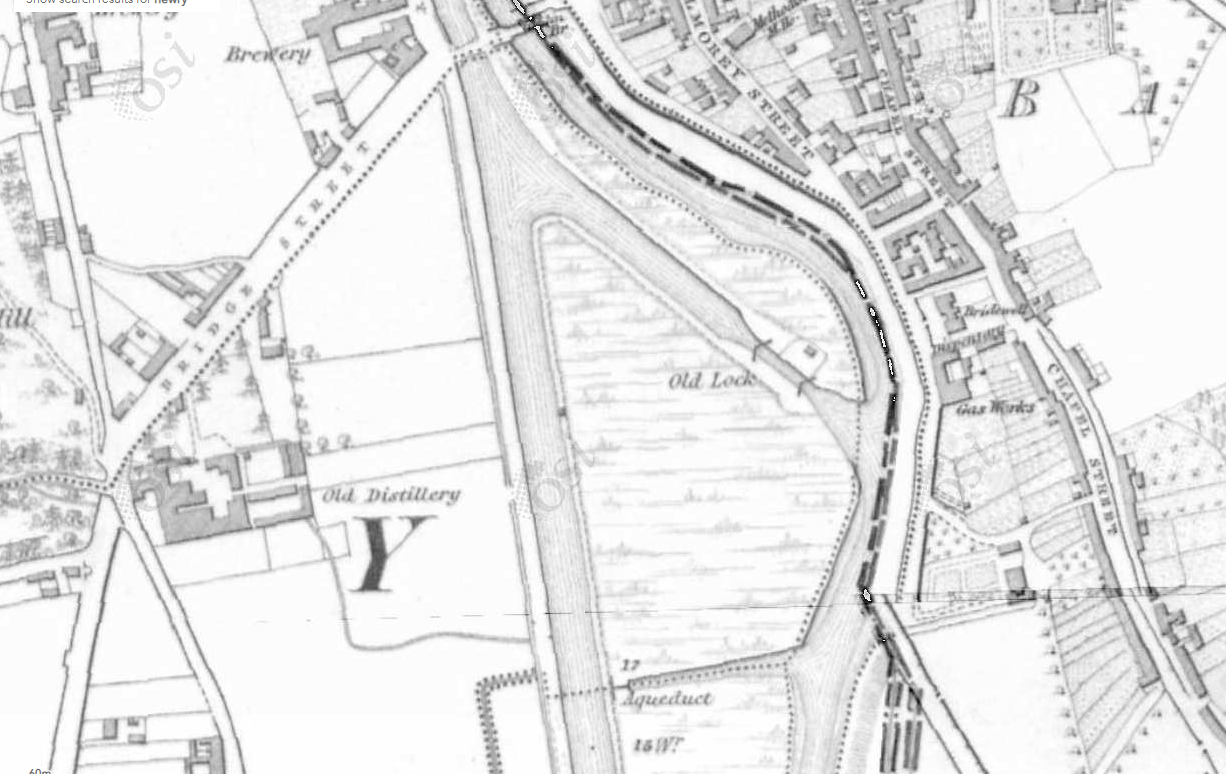
This is what the current basin used to look like, it was the original entrance to the Newry canal, the old lock is the original sea lock.

It still smells a bit like a distillery around there - I wonder if there is a fine ale brewed in Newry?
In my excitement, I forgot to video the ENORMOUS lock - I rectified that on the way out .....
https://photos.app.goo.gl/ptzgnaBB1NUDNm1C7
https://photos.app.goo.gl/k3oiesZtciK5VKbc9
-
At the head of Carlingford Lough, the Newry Ship Canal links the the Lough & the Newry River with the Albert Dock at Newry,but it used to go much further ...
https://en.m.wikipedia.org/wiki/Newry_Canal
Anyway, thanks to the incredibly welcoming & helpful council & tourist information, we were able to experience this wonderful little canal - and actually SAIL up it to Newry.
They charge £30 odd quid for lock access and a week in the canal - a bargain.
Sadly, the planners have decided on a non opening bridge over this section, which would close it to many vessels - but protests are afoot.
Hopefully, the links to this splendid trip work.
https://photos.app.goo.gl/mKRRxWE3HNmd6JYA8
https://photos.app.goo.gl/ys54YGWLpEgnWU159
https://photos.app.goo.gl/9FVyhddonLXBM5ZT8
https://photos.app.goo.gl/SpHquDbgrsazFwHT8
https://photos.app.goo.gl/PqmmsSxoJSKofCfd6
-
3
-
-
Just now, adam1uk said:
Blisworth.Ah yes, so many tunnels. We transited the Blisworth four times - Braunston twice.
20 minutes ago, M_JG said:Nice trip report but was your camera broken? 😉
No!

Oh, I suppose there should be a boat in there somewhere......
-
Another smashing winter cruise for December to February.
Napton to Stratford on Avon
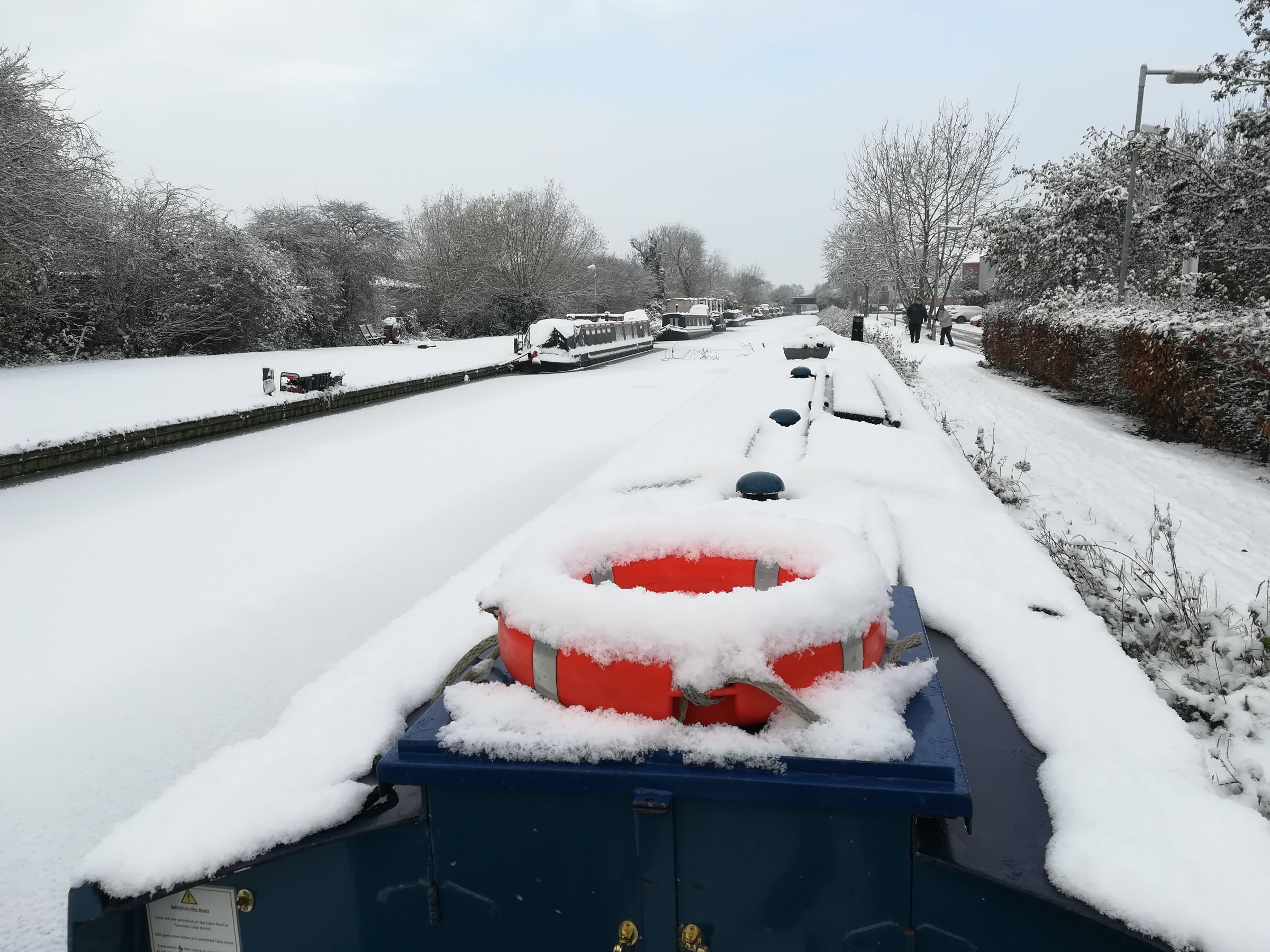
2 weeks frozen in the ice.
All the way across, down the GU and up the Aylesbury Arm.
2 weeks frozen in the ice
Back up the GU, down the Northampton Arm and a little pootle on the Nene.
Back up the Northampton Arm and back thru the Braunston Tunnel again to Stoke Bruene.
Braunston Tunnel again and up the Leicester line.
Market Harborough Arm to, you guessed it, Market Harborough.
Then back to Lower Heyford and finish.
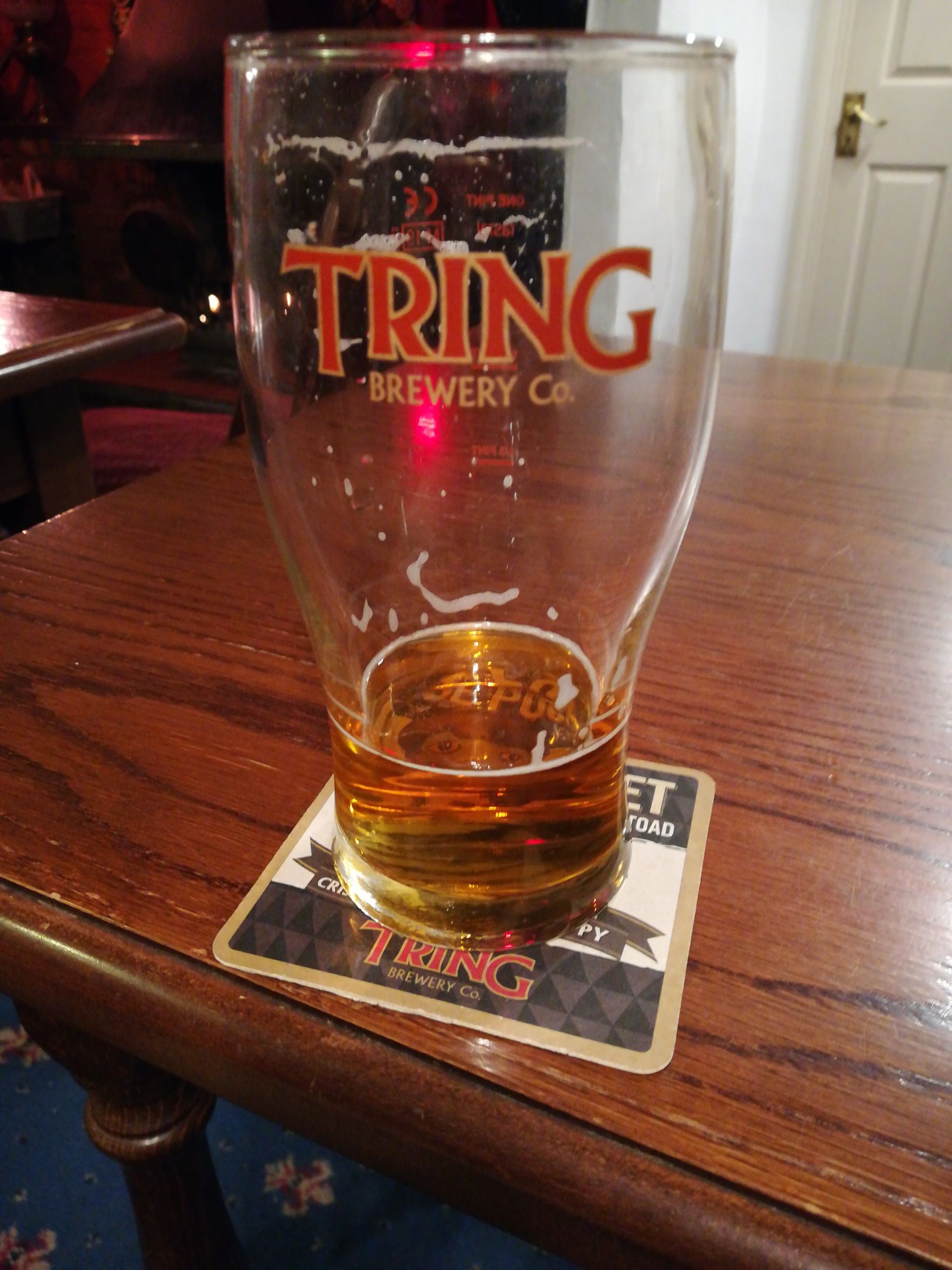
The Aylesbury Arm was great - and gave us the Kings Head in Aylesbury and the Half Moon at Wilstone as well as a stroll to my old home town of Tring (top tip - Nonna's Pantry). It also gave us both Chiltern & Tring Brewery beers. The nearby Wendover Arm is cute and will be great when fully restored. Honourable mention to the Red Lion at Marsworth.
Northampton & the arm were a delight & the river visit added interest. Nice marina.
The south Stratford canal is a little gem and, if you're going to be stuck in ice, Stratford is a place to be (or not to be!)
Watford & Foxton flights - nuff said.
The Boat at Stoke Bruene delivered.
Market Harborough was another first & jolly enjoyable it was. Try the Inclined Plane ale from the local brewery.
Leighton Buzzard was another unexpected pleasure - and you can't go past the Black Lion (pork pie platter - mmmmmm). Check out Espresso Head if you're a coffee head.
Milton Keynes gave us an excellent second hand book shop, community cafe and an excellent tapas bar.
The Hatton locks were spectacular and a tiring day, but gave us the cafe at top on the way up and the Cape of Good Hope for a celebration on the way down.
Leamington spa gets posher the further away from the canal you go, but yielded a great canal side brunch and a fantastic cheese shop in town.
I have yet to tot up miles & locks, but will post 'em if I get round to it!
Back on the briny for the summer! Ardfern - Bristol, with any luck.
-
2
-
 1
1
-
March of the Widebeams
in General Boating
Posted
There are a couple of wide beams in Cardiff Bay - now that's a limited cruising area.
At least one came down from Sharpness - the mind boggles!