

davidwheeler
-
Posts
165 -
Joined
-
Last visited
-
Days Won
1
davidwheeler's Achievements

Collaborator (5/12)
179
Reputation
-
Does anyone have an interest in Czech steam tugs?
davidwheeler replied to davidwheeler's topic in History & Heritage
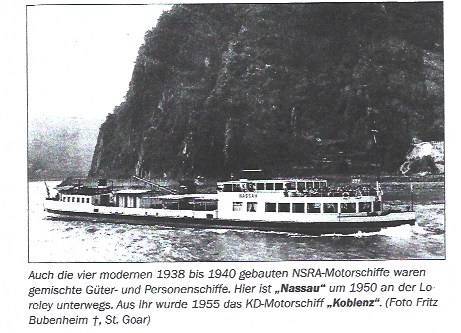
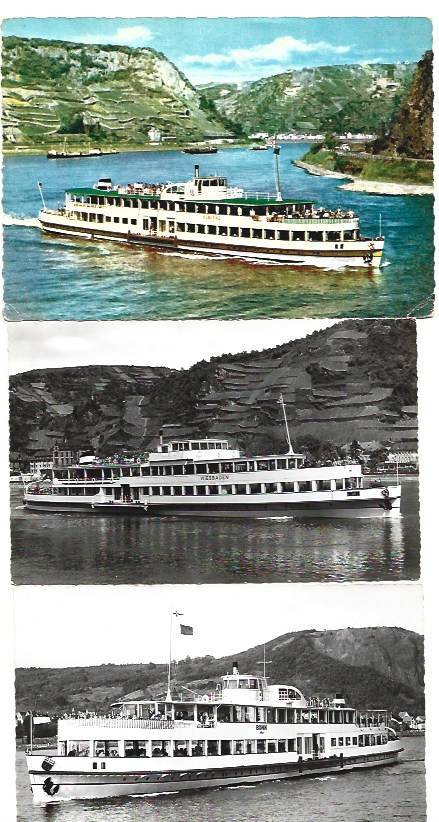
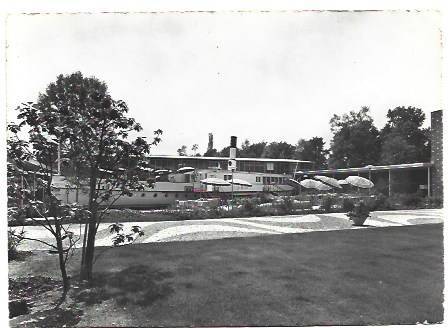
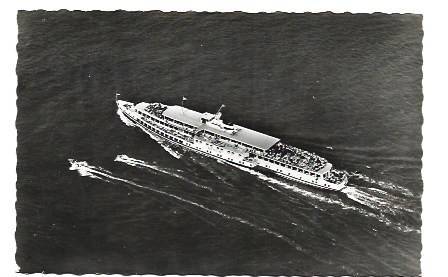
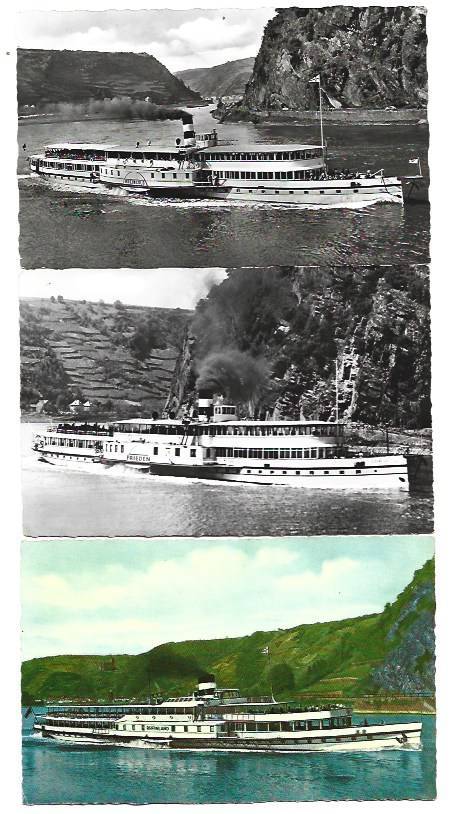
One last go, then. Although on the great Swiss lakes, large passenger motorships began to compete with, and to replace some of the paddle ships in the late 1950s, on the Rhine the change began to happen rather earlier. Four of these motorships reflect something of the times. In the 1930s, the German company Koln-Dusseldorfer operated its Rhine passenger service in association with the Dutch company Nederlandsche Stoomboot Rederij Akkermans, the Dutch Rhine company, in that vessels of that fleet were chartered and were included in the KD timetable. Four of these Dutch motorships, combined passenger and cargo vessels, were built between 1938 and 1940. Attached is a photo of one of them. It is from Hans Renker's 'Koln Dusseldorfer Dampfer nach 1945. Die Letzten Vierzehn'. These four vessels were seized by the Wehrmacht after Holland was overrun, and used by it during WW11. In 1945, the four ships were returned to their Durch owners Akkermans. By 1951, the four had been rechartered by KD and were operating on regular passage on the Rhine. In 1955 the KD purchased the four from Akkermans and rebuilt them as pure passenger vessels, propelled by Voith Schneider propellers. Not as attractive as the steamers, but powerful as was needed on the Rhine. I liked them.
-
Does anyone have an interest in Czech steam tugs?
davidwheeler replied to davidwheeler's topic in History & Heritage
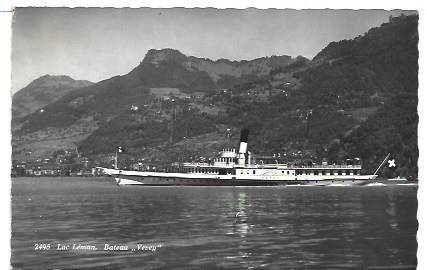
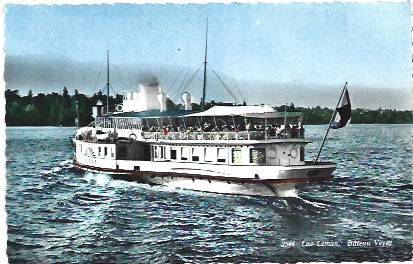
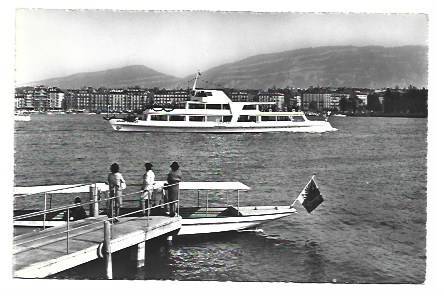
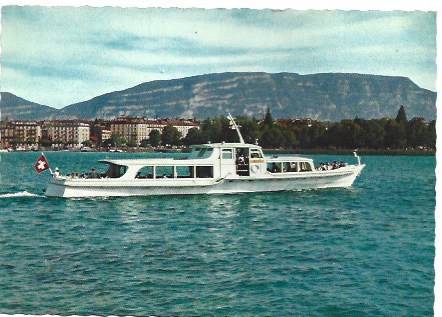
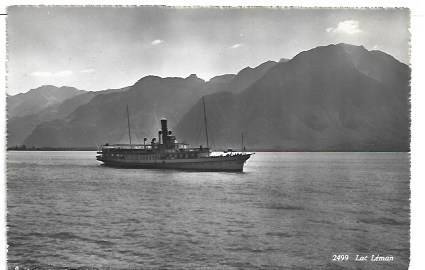
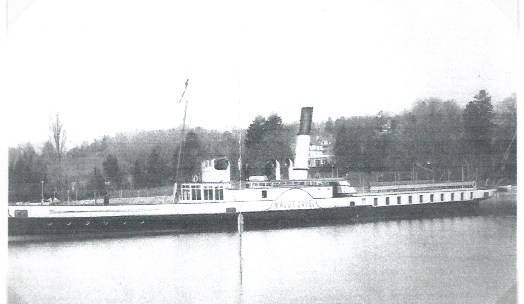
Although there was huge public and political pressure on the Lake Geneva operators, the CGN, to keep the traditional lake steamers going, the vessels were ageing and costly to maintain. Efforts were made to contain the expense by re-engining the workhorses with not always aesthetically pleasing results. The Lake Geneva steamer Vevey built in 1907 by Sulzer brothers was a two decker. In 1955 the steam engines were replaced by Sulzer diesels powering electric generators and her funnel was changed to what was then felt to be suitable for a motorship. But fashions change and in 1987 a more traditional style of funnel replaced the motorship one. But the vessels remained uneconomical and expensive to run and in the early 1960s the first of the big Lake Geneva motorships was introduced. The postcard shows the new Henry Dunant in 1963. The ship was built in Austria and brought across to the lake in bits and assembled in the CGN yards at Lausanne. The card was the copyright of the restaurateurs, M et Mme Rene Tissieres, and I thank them, belatedly, for allowing me to use it. For those who may be interested in the fascinating and complex history behind the CGN ships there is an excellent book by Jacques Christinat ' Bateaux du Leman' published by Cabedita in 1991.
-
Does anyone have an interest in Czech steam tugs?
davidwheeler replied to davidwheeler's topic in History & Heritage
This is I think the Lotschberg, on Lake Brienz. Built by Escher Wyss in 1914. A real beauty. Very similar to one or two of the Lucerne steamer, but distinguished by the hull colouring. -
Does anyone have an interest in Czech steam tugs?
davidwheeler replied to davidwheeler's topic in History & Heritage
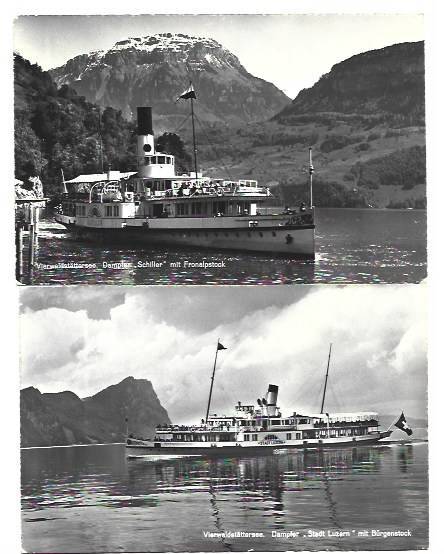
I am in the company of experts. I am out of my depth. To try to keep things going, I will add a couple of paddle steamers I met one half term in Lucerne in 1963. The 'Stadt Luzern' built in 1928 by Sachsenberg was and I hope still is, much favoured for Sunday mystery tours on the lake. When I travelled on her she was doing an average of 10300 km per year. The other steamer, the Schiller, of 1906, converted from coal to oil fuel in the 1950s, was considered by company staff and passengers as the best-proportioned and most elegant of the lake steamers. But more expensive to run than some of the others. Lovely ships both, as were the other steamers, and some fine motor vessels as well. But the oldest ship on the Vierwaldstattersee still in existence is the Rigi. Built by Ditchborne & Mare, London, the Rigi made her first voyage in March 1848, carrying Thomas Cook's first visitors to Switzerland. She continued, with various updates and revisions, to work on the lake for over one hundred years. In 1958 she was hauled out of the lake and into the Transport Museum where she was the centrepiece, and a restaurant. Too pricey for me, although I had a good look round. Damaged as a result of the August 2005 flooding, she is I understand now a static display with her appearance restored to its original. And no longer a restaurant. Anyone interested in lake steamers and motorships might find the book 'Schiffahrt auf dem Vierwaldstattersee' published by Verlag Eisenbahn in 1974 ISBN 3 85649 021 3. worthwhile. Individual descriptions of all the vessels are in German, and the illustrations of each and every one of the lake vessels are superb and need no translation. Easily obtainable over the internet. Any more contributions? I have exhausted mine, but I have learned a lot.
-
Does anyone have an interest in Czech steam tugs?
davidwheeler replied to davidwheeler's topic in History & Heritage
Bee mentioned stern wheelers on the Rhine. I know nothing about those but I was, in 1961, completely fooled by the Berlin, built for the Koln Dusseldorfer in 1959. I thought it looked like a paddle ship even though it didn't sound like it. It was in fact propelled by two Voith Schneider props amidships. The Shell-BP tankers on the Gloucester & Berkeley Canal used the same system.
-
Does anyone have an interest in Czech steam tugs?
davidwheeler replied to davidwheeler's topic in History & Heritage
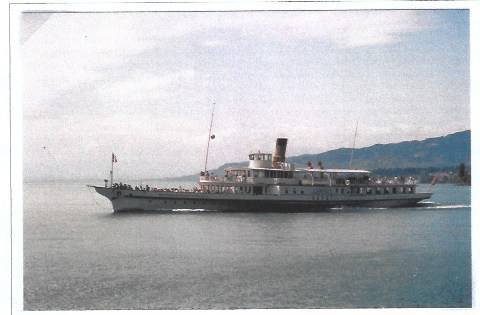
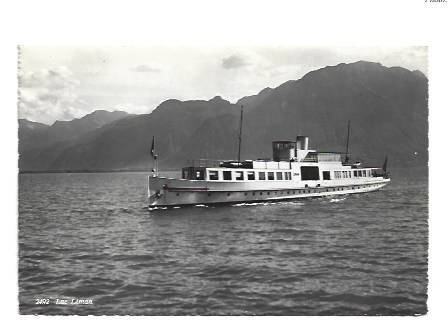
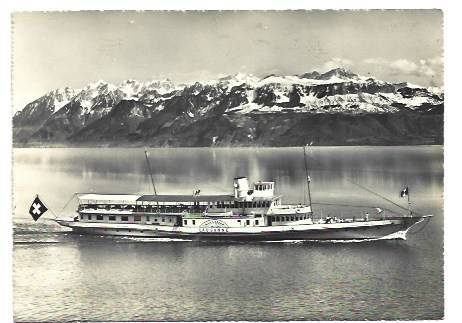
Thank you for those lovely photos. We seem to have run out of steam a bit, at least I have so I am going to change the subject completely and show you some pictures of my school buses. They are all from postcards because I did not have a camera and anyway who takes pictures of school buses. Most of the time it was this one - Col Vert, a launch built in 1960. Then as things picked up a little, Leman, originally built as a paddle steamer in 1857, but converted to motor ship in the 1930s. Scrapped in 1989. Then as the summer came on and more people were about, we would have the Lausanne, built in 1900, scrapped 1978. In full season, when tourists were on the lake as well as us students, the flagship La Suisse. Built in 1910. And if we were really really lucky, every now and then the Major-Duval would come along, as a reserve bus. Built in 1892. Scrapped in 1990. Not a bad way of getting to and fro school. Not a lot to do with canals, but maybe of interest to some. I just loved them. A bit like British Rail Southern Region in the 1980s, you never quite knew what would turn up. So every day was interesting
-
Does anyone have an interest in Czech steam tugs?
davidwheeler replied to davidwheeler's topic in History & Heritage
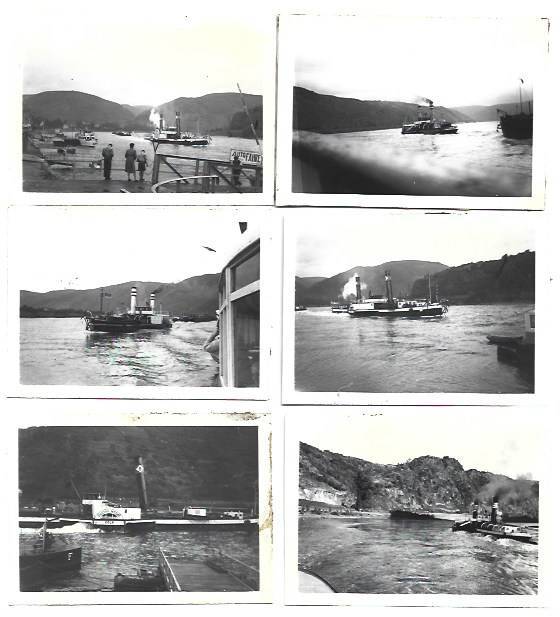
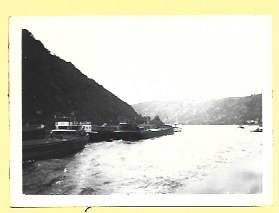
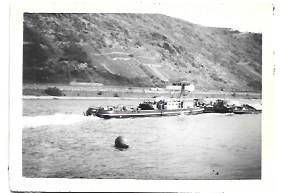
I have started this so I will go on. These are photos of Rhine paddle tugs. I have been and continue to be looking for someone to identify two them, or at least their owning company. There were not I think very many of these tugs still operating in 1957. Three of the photos, the ones taken from the shore, are of the Gustav Wegge. Built in 1926 by Gebr Sachsenberg, the builder of so many of these ships, she became part of the famous Braunkohle fleet, immaculately maintained, two years later. Scuttled by her crew in 1945, to avoid capture by the Allies, she was salvaged the next year and continued in service until 1957, the year I watched this magnificent piece of engineering forge past. Even in those days these giants attracted attention. I feel privileged to have seen them at work. The Gustav Wegge was sold for breaking in 1959. And just in case it is of interest, three of the Rhine passenger ferries. You bought the postcards on board with a souvenir stamp on. We spent the night on the Rheinland in Cologne after the journey from Boppard. It was exciting, but the heat from the steam engines was what I remember most. There we are. I hope of some interest.
-
Does anyone have an interest in Czech steam tugs?
davidwheeler replied to davidwheeler's topic in History & Heritage
I have always assumed that this was an elderly unpowered barge. If my memory is correct they were coming out of a lock - there are I believe four in Prague - when I first saw them. The barge had a large grappling hook type anchor hanging off a davit at the stern, and one of the points of the hook dangled in the water. I thought by the extent of the accommodation block if such it is, that it was a long distance barge. There was a woman on the bulwarks, cleaning the deck. I am not expert on barges. I just like them and always have. Here in the hope that it will keep things going so that we get some more and better photos, is a 1957 photo of an orthodox tug with a number of barges - if you can make them out - and another of the first pusher tug to operate on the Rhine. At least that was what we were told at the time, by somebody in authority. I don't know how much detail you can make out, but there were at least ten people on the temporary elevated bridge. Someone somewhere will perhaps be able to identify the tug. Or at least the company, from the funnel markings.
-
Does anyone have an interest in Czech steam tugs?
davidwheeler replied to davidwheeler's topic in History & Heritage
Thank you for that. Lovely barges. Maybe I will risk adding my Rhine steam paddle tug photos. And the first pusher tug on the Rhine. 1957 as I remember. It might be of interest. I will think about it. But it won't match this photography, or anything like it. -
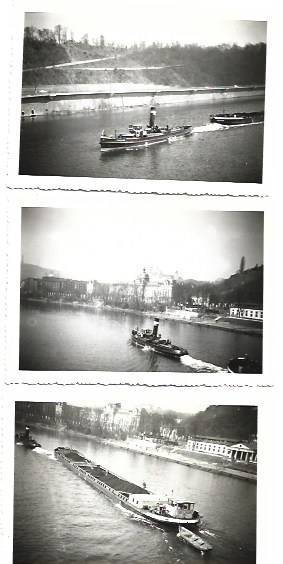
I think my last one was too far off the mark. This one may be completely beyond the range of interest, but you never know. The year is 1963. The tug is I think Czech since its number starts CSPLO. The coal-carrying barge has the number CSPLO629 I think. Registered in Prague thus perhaps a local coal delivery, but from where I have no idea. The River is the Vltava. The barge is towing an interesting-looking wood tender. Anybody got any constructive ideas? Otherwise I will pass it on to another site in case that is more appropriate. Anyway, a good looking pair of vessels, do you not agree?. And the building in the very far background is St Vita's Cathedral, where on a Sunday you can hear the most stunning trumpet playing from far above you. Or you could.
-
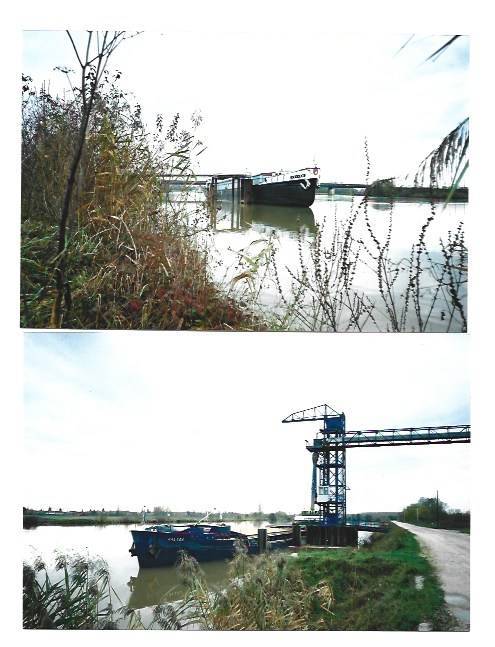
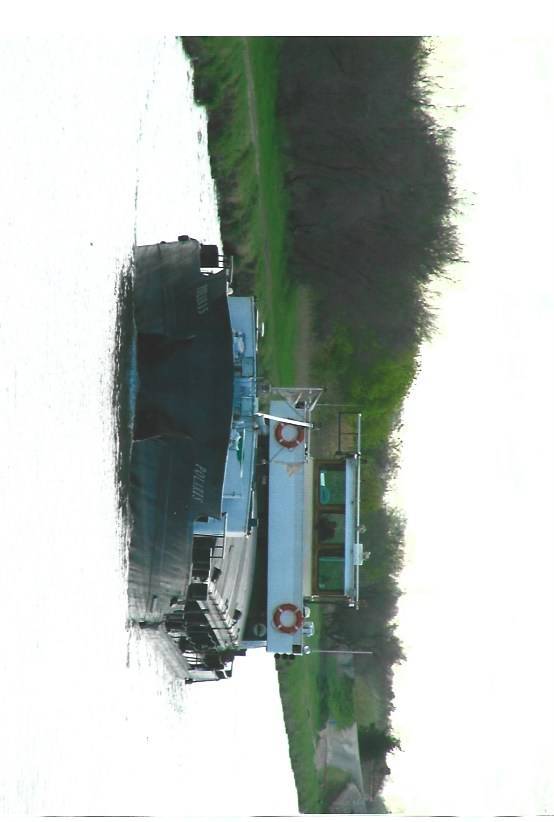
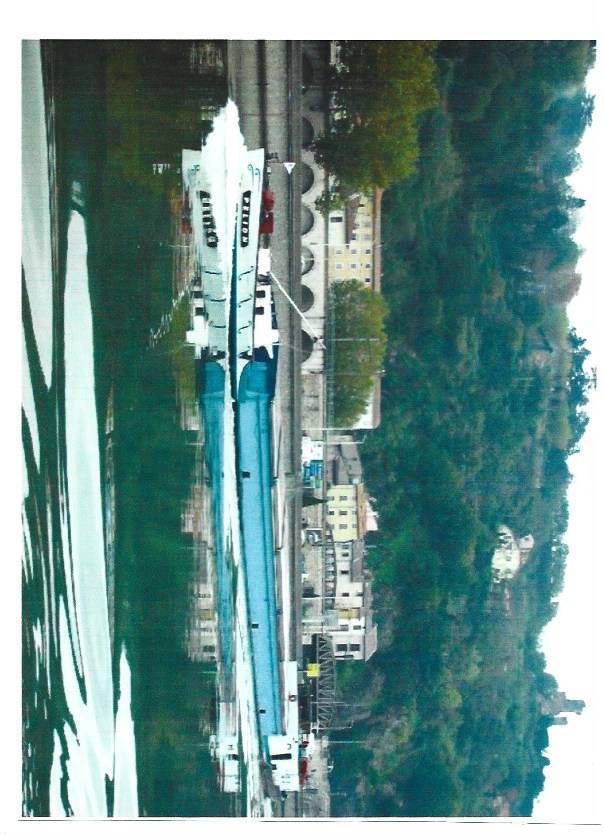
These two came up the River Rhone and the River Saone, with both rivers running high, late one autumn day in 2002. They had come from the South to collect the grain harvest from the area around Dijon. The Jalyda made fast under the grain shoot, while the Pelion went on up river, under the railway bridge, to St Jean de Losne, and turned. Both would load and return South to Marseille. Each of them getting on in years, the Pelion 51, the Jalyda, 48. The Pelion one of the last of the 'Canadiens', built by the Arsenal de Cherbourg in 1951 as part of the planned restructure of the French inland fleet following the destruction and displacement caused by the Second World War. As a part of a careful assessment by the post-War French Government, some 25 x 700 ton vessels and 45 x 900 ton vessels were ordered from American and Canadian shipyards. These were ordered from these countries because French yards did not at that time have the capacity to build all the elements of its new fleet The first 22 of the 900 tonners were built in Canada. Prefabricated complete, the bow section contained the crew's quarters, the stern the captain's and the machinery, with six separate midship sections, all temporarily assembled for testing, then disassembled for shipping across the Atlantic, and finally all welded together to completion. Another 60 were built in France to the same design and of these Pelion was one. I believe and hope that she still survives, an important element of the post-War rebuilding of Europe. Other sizes and types were produced under the same plan to restructure and modernise the French inland fleet, and drag it from wooden hulls and unempowered to steel and motorised. The Jalyda was not part of the State plan, but was motivated by the same need to replace War-damaged or destroyed tankers. This vessel was built as the Vercors, by the Ateliers et Chantiers Bariol at Arles, on the Rhone in 1954. This vessel was part of the tanker fleet of Azur-Desmarais Freres, the Star Fleet. In its day one of the, if not the, largest fuel distributors in France. Three such tankers operated on the Rhone. The one survivor, renamed Jalyda, converted to general cargoes, once the tanker fleet was made redundant. I believe that the Jalyda, renamed Polaris, caught fire on the river in 2012 and has since been scrapped. More than barges, really, they were inland ships. Handsome vessels, both of them. Although both old at the time they made this trip up the two rivers, by no means that old. The average age of the French inland fleet is I understand about 48 years, operated and owned mostly by individuals, themselves a good deal older than that. The larger photos are internet ones. I cannot trace ownership of them and hope they do not mind my using them to illustrate some of the best of French inland shipbuilding.
-
A little bit more about Cones and narrowboats
davidwheeler replied to davidwheeler's topic in History & Heritage
Hotchkiss Hydraulic Propeller and the Hunt for Torfrida CANCELLED due to operational irregularities. -
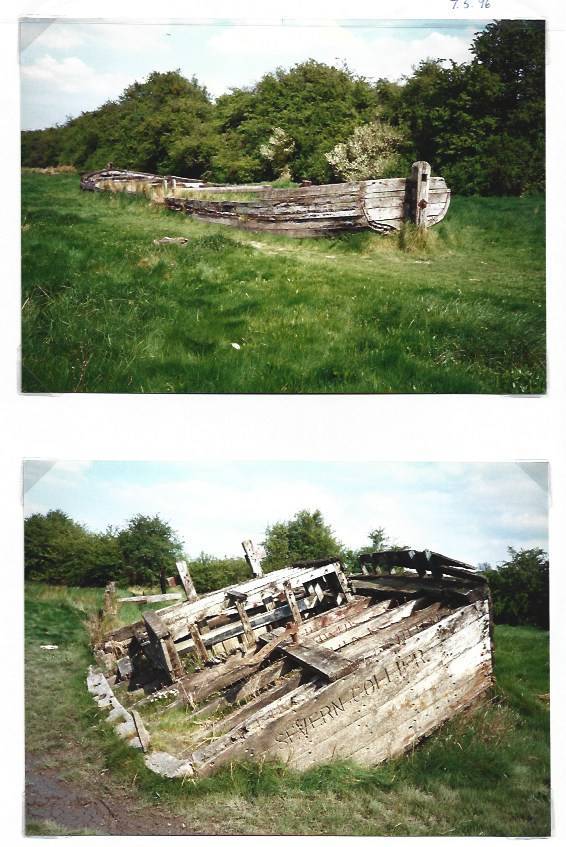
By the 1980s, things began to change. I visited regularly during the late 1950s and through the 1960s. Then a bit of a pause until the early 1980s. To that time, the site seemed to remain relatively undisturbed, save for the arrival of a few new wooden hulls and the last of the FCBs. Access to the site was not easy and not obvious. During those early years I never met anyone there, nor any sign that people had been there although clearly they had. But they left no footprint. Not so by early 1980. Many of the hulls had been daubed with white paint, crude and obscene words and outlines of genitalia. That was that. For me,finish. I learned that later that decade arsonists got seriously to work and destroyed many of the best of the ships. Only Harriett seemed to escape, perhaps because it was too far to walk. Not until the 1990s, when I got to know Paul Barnett, did my interest rekindle. But the site now is a mere ghost of what it was. Here to end my contribution, a couple of photos from 1996. The Harriett has at least some legal protection as well as the physical protection provided by the Friends of Purton. The poor old Severn Collier, never the most beautiful example of a wooden barge, and not a particular success as such, was still recognisable. What she is like now, I do not know. As has been written before during this story, the Friends of Purton website gives masses of information, not only of the history of the ships and barges, but also of Paul Barnett's struggle to identify them and to protect them. His book is full of interesting facts, comments and pictures, not only of Purton, but the other sites as well.
-
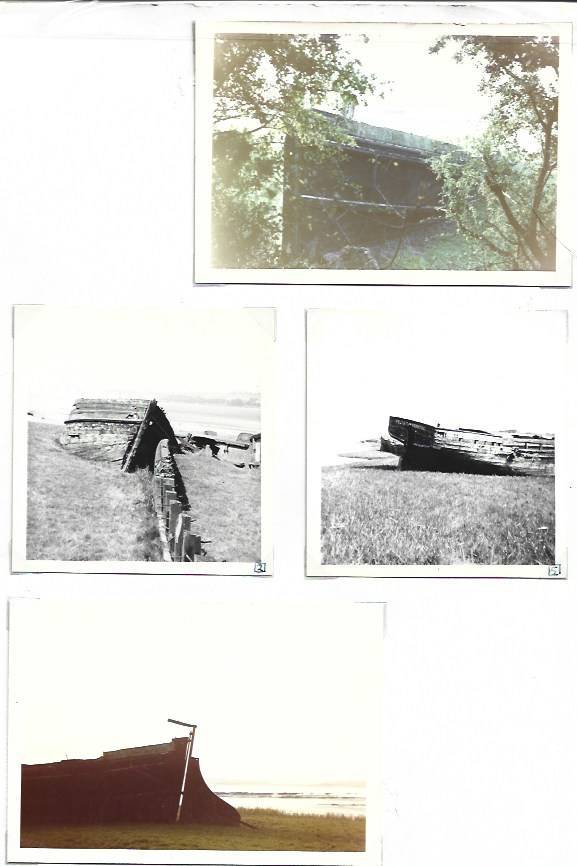
What I am trying to convey is an impression of the Severn bankside at Purton, where it lay close to the Canal, in the late 1950s and early 1960s. The first thing is that the land was grazed by cattle so the ground was close cropped and quite smooth, rather like a well maintained lawn, not trimmed too closely as indeed they recommend these days. On top of this lawn were plonked large wooden hulls of lots of different shapes and sizes, reflecting the original purpose of the vessel. They weren't placed neatly, as in a municipal car park, they were all over the place. Some broadside to the hedge between bank and canal, some pointing directly at it. Some sunk down into the earth, so that one could step from the grass outside the vessel, onto the grass inside it. Others high up above, with their bottom planks just resting on the ground. That was part of the mystery of it, these things were quite out of their context. You do not expect a whacking great ship to be sitting in your garden, let alone dozens of them. Granted if one had thought about it, the reason would have become obvious but one didn't and there was no explanation, no information as to how these things got there, how anyone managed to get them so far above the river, and why. They were just there. Just beyond the hedge. You pushed through and there in front of you was a great big wooden hull. Magic it was. Unbelievable. Unreal. Here are a few more photos, not much good, but perhaps you can see a bit what I mean. The top one, looking through the hedge, was a very shapely vessel although you can't see that, a former schooner, 'Shamrock'. Middle left is the 'J & A R', a former trow, in the foreground the towed barge 'Barry', and in the background one of the concrete barges, '67' or '77'. Middle right, the Voltaic, in 1965. Bottom, I can't remember, but a double ended towing barge, wooden but with a iron or steel rudder.
-
This is, I hope, a rather better version of the photo reproduced earlier. To the left, the complete hull of the former Perth-built schooner, the Sarah MacDonald, dating from 1867. Latterly, renamed Voltaic. To the right, intact save for her name cut from the stern, is the Edith, a former ketch rigged trow. You can compare her boxey lines with that of the former schooner. This is 1969, when arguably Purton was at its best as the collection of wooden vessels without comparison anywhere else in the British Isles for its diversity and interest. The Voltaic, sixteen years on the banks at Purton, the Edith just 12. But by 1986 these two vessels had been destroyed by arson as were others on the site.